


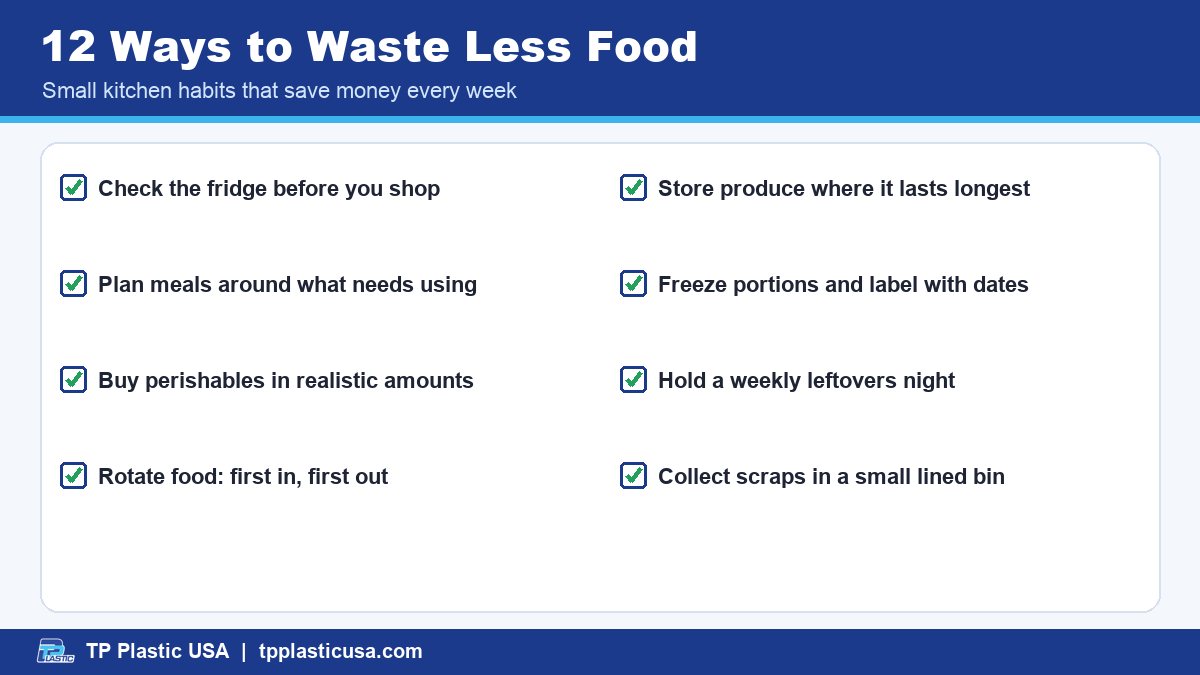
Wilted spinach, forgotten leftovers, half a loaf of bread gone stale. Most households throw away more food than they realize, and every bit of it is money spent for nothing. The good news: you don’t need a complicated system to reduce food waste. A few small habits around shopping, storing and cooking make a real difference. Here are 12 practical tips you can start using this week.
Why It’s Worth It to Reduce Food Waste at Home
Food waste adds up quietly. A few dollars of produce here, a container of leftovers there. Cutting it back means lower grocery bills, fewer last-minute takeout orders and a trash can that fills up more slowly and smells less. It also makes weeknight cooking easier, because you always know what you have.

Keeping food visible is one of the easiest ways to waste less.
Plan and Shop Smarter
1. Check before you shop
Take a quick look in the fridge, freezer and pantry before you write a list. Snap a phone photo of the fridge shelves so you can check it at the store. This single step prevents a lot of duplicate buying.
2. Plan meals around what you already have
Start your weekly plan with the ingredients that need using first, then fill in the gaps. If you have half a bag of carrots and some chicken, that’s a stir-fry or soup waiting to happen.
3. Shop with a list and realistic portions
Bulk deals only save money if you use everything. Buy perishables like berries, herbs and salad greens in the amounts you’ll actually eat in a few days. Buy shelf-stable items in bulk instead.
Store Food the Right Way
4. Use first in, first out
When you unpack groceries, move older items to the front and put new ones behind them. It’s the same rotation grocery stores use, and it works just as well in a home fridge or pantry.
5. Learn where produce lasts longest
Not everything belongs in the fridge. A few general rules:
- Tomatoes, bananas, onions, potatoes and whole winter squash usually do better at cool room temperature.
- Keep onions and potatoes apart; stored together, they tend to spoil faster.
- Leafy greens and herbs last longer in the fridge wrapped loosely with a dry paper towel to absorb moisture.
- Many fruits like apples give off gases that speed ripening of nearby produce, so give them their own drawer.
6. Keep the fridge organized and visible
Food you can’t see is food you forget. Use clear containers, keep a “use first” bin at eye level, and wipe up spills so smells don’t build up. Our tips on getting rid of trash can odors work for kitchen smells too, and these cling wrap kitchen hacks help keep cut produce and leftovers covered.
Freeze It Before It’s Too Late
7. Freeze portions, not just leftovers
Bread, cooked rice, shredded cheese, ripe bananas and cooked meats freeze well. Divide them into meal-size portions so you only thaw what you need. Use containers or bags labeled for freezer use and press out extra air to help prevent freezer burn.
8. Label everything
Write the item and date on every container that goes into the freezer. A strip of masking tape and a marker is all you need. It turns the “mystery bag” problem into a simple rotation.
9. Keep a “use soon” freezer shelf
Once a week, pull one or two older items from the freezer and build a meal around them. It keeps the freezer from becoming a food graveyard.
Cook and Use Leftovers Creatively
10. Give leftovers a second life
Leftover roast vegetables become a frittata. Stale bread becomes croutons or bread pudding. Soft fruit goes into smoothies, and vegetable trimmings like onion ends and carrot peels can simmer into a simple stock. Plan one “clean out the fridge” dinner each week, such as tacos, fried rice or pasta, where almost anything works.
11. Understand date labels
Date labels can be confusing. Phrases like “best if used by” generally describe peak quality, not a hard cutoff for safety, while “use by” dates deserve closer attention. The rules for specific foods vary, so when in doubt, check a trusted food-safety resource and don’t eat anything that looks, smells or tastes off.

Scraps can become stock, or go into a small bin that is emptied often.
Handle Scraps Neatly
12. Collect scraps separately
Even with good habits, you’ll have peels, coffee grounds and bones. If your town offers a food scraps collection program, or you have a backyard compost pile, keep a small lidded container on the counter for scraps and empty it every day or two.
If scraps go in the trash, a small can near the prep area lined with a drawstring trash bag makes cleanup quick: tie it off and take it out before it gets smelly. A medium 6 gal drawstring bag fits many small kitchen and countertop cans. If odors are a concern, some households prefer scented drawstring bags for the kitchen bin. As always, keep plastic bags away from young children and pets.
A Simple Weekly Routine
- Before shopping: check the fridge, plan meals around what needs using.
- After shopping: rotate older food to the front, wash and prep produce you’ll snack on.
- Midweek: freeze anything you won’t use in time.
- End of week: have a leftovers night and wipe down the fridge shelves.
Want more ideas for keeping the kitchen in order? See our guide to plastic storage solutions for an organized home.
Frequently Asked Questions
What is the easiest way to reduce food waste?
Check your fridge before shopping and plan meals around what’s already there. That one habit prevents most duplicate purchases and forgotten food.
Can I freeze food right up to the date on the label?
Many foods can be frozen before their date to extend their use, but quality varies by item. Freeze early rather than at the last minute, and check a food-safety resource for specific foods.
How do I keep kitchen scraps from smelling?
Use a small lidded container or a lined can and empty it often, ideally every day or two. Rinse the container regularly and keep it out of direct sun.
Setting up a better kitchen trash station? Take a look at our drawstring trash bags for easy, tie-and-go cleanup.


