


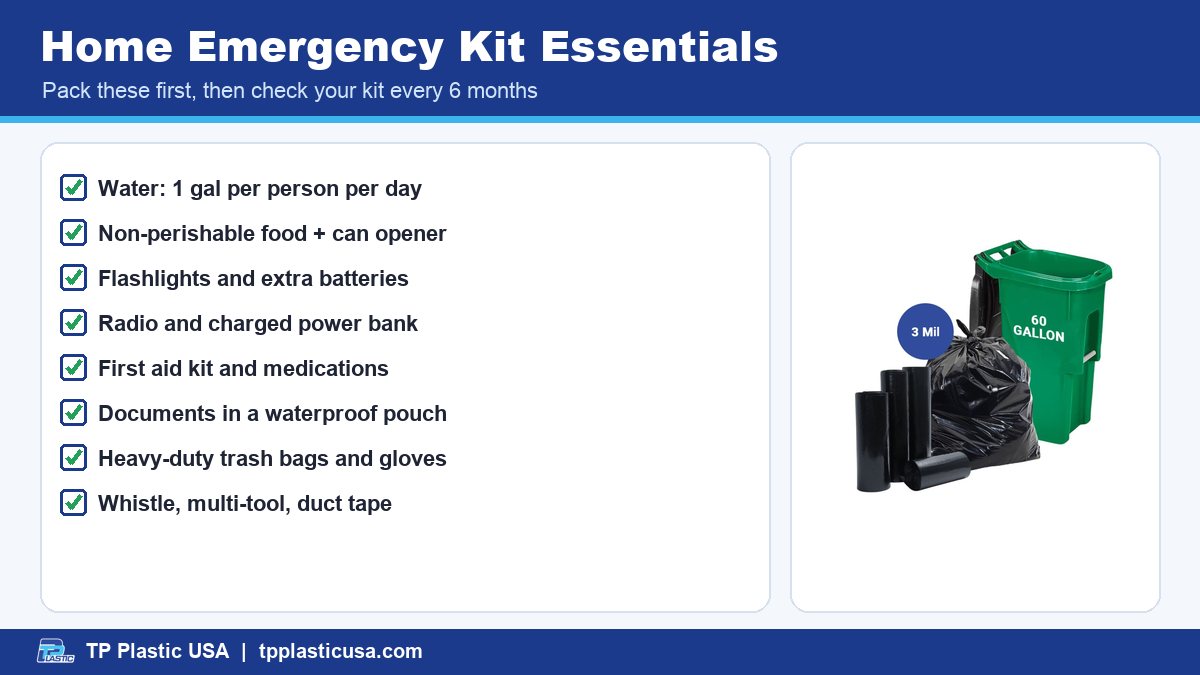
Power outages, storms, wildfires and winter weather can leave a household on its own for a few days. A well-packed kit means you are not scrambling in the dark for batteries or water. This emergency kit checklist walks through the essentials, a few useful extras that people often forget, and a simple routine to keep everything ready. For official guidance tailored to your area and the risks you face, see Ready.gov and your local emergency management office.
Start With the Basics: Water, Food and Light
These are the items that matter most in almost any emergency.
- Water – a common guideline is at least one gallon per person per day for several days. Include extra for pets.
- Non-perishable food – canned goods, peanut butter, crackers, dried fruit, granola bars. Choose foods your household actually eats, and pack any special diet items.
- Manual can opener – easy to forget, impossible to replace in a pinch.
- Flashlights and headlamps – one per person is ideal, so nobody fights over the light.
- Extra batteries – in the right sizes for every device in the kit.
- Battery or hand-crank radio – for news and weather alerts when cell service is spotty.
- Phone charger and power bank – keep the power bank charged.

Lay everything out once so you can see what's missing.
Emergency Kit Checklist: Health and Personal Items
- First aid kit – bandages, gauze, tape, pain relievers and any items your family uses regularly.
- Prescription medications – a supply for several days if possible, plus copies of prescriptions. Ask your pharmacist or doctor about the best way to keep extra on hand.
- Glasses, contacts and hearing aid batteries.
- Hygiene items – wet wipes, hand sanitizer, toothbrushes, feminine supplies, diapers if needed.
- Disposable gloves – for cleanup, handling trash and messy jobs. A box of CPE gloves takes up little space.
- Dust masks – useful for smoke or debris.
Documents and Money
If you have to leave quickly, having key papers in one place saves a lot of stress later.
- Copies of IDs, insurance policies, medical information and bank contacts.
- A printed list of emergency phone numbers, since your phone may die.
- Some cash in small bills; card readers may be down during an outage.
Keep documents in a waterproof pouch or a sealed container, and consider saving encrypted digital copies as a backup.
The Underrated Helpers: Heavy-Duty Trash Bags and Stretch Wrap
Two of the most versatile items in any kit are also among the cheapest.
Heavy-duty trash bags
A few thick, large trash bags earn their space many times over:
- Sanitation – line a bucket or a toilet bowl when water is off, and bag waste securely.
- Rain protection – cut holes for your head and arms to make an emergency poncho. Always keep the face fully uncovered.
- Ground cover – lay one down to keep yourself or supplies off wet ground.
- Cleanup – collect debris, wet items and spoiled food after a storm.
- Keep things dry – slip clothing or bedding into a bag and tie it off.
Thicker bags hold up better for these jobs. Options like our 60 gal 38×58 3 mil bags from our LD trash bag line are a good fit. Learn more in our post on heavy-duty trash bags.

Thick 3 mil trash bags have many uses in an emergency kit, from cleanup to sanitation.
Stretch wrap
A small roll of hand stretch film is handy for bundling supplies together, wrapping a bedroll or tarp, and holding a covering in place over a box of supplies. It clings to itself, so no tape is needed. For more household ideas, see our guide to stretch wrap for storage and moving.
Tools and Extras
- Whistle – to signal for help.
- Multi-tool or basic tools – including a wrench or pliers to turn off utilities if instructed.
- Duct tape and a tarp – quick repairs and shelter.
- Matches or a lighter in a waterproof container.
- Local maps – in case navigation apps are unavailable.
- Change of clothes and sturdy shoes for each person.
- Pet supplies – food, water, leash, carrier and waste bags.
- Comfort items – a deck of cards or a book helps pass the time, especially with kids.

A smaller kit in the car covers you when you're away from home.
Don’t Forget a Car Kit
If you drive, keep a smaller kit in the trunk: water, snacks, a flashlight, a phone charger, a blanket, jumper cables, a first aid kit, a couple of heavy-duty trash bags and gloves. In winter, add a scraper, a small shovel and sand or cat litter for traction.
Store and Check Your Kit Every 6 Months
A kit only helps if it works when you need it.
- Store it in an easy-to-carry container, such as a plastic tub or a backpack, in a cool, dry spot everyone knows about.
- Set a reminder every 6 months, for example when the clocks change.
- Replace water, food and medications before they expire.
- Test flashlights and radios, and swap batteries if needed.
- Update documents, phone numbers and clothing sizes as your family changes.
As with any plastic bags, store trash bags and wrap out of reach of young children and pets.
Frequently Asked Questions
What are the most important items on an emergency kit checklist?
Water, non-perishable food, a flashlight, extra batteries, a first aid kit, medications and copies of important documents are the core. Build out from there based on your household and local risks.
Why include trash bags in an emergency kit?
Heavy-duty trash bags are useful for sanitation, keeping items dry, ground cover and cleanup. They are light, compact and inexpensive.
How often should I check my emergency kit?
Every 6 months is a good habit. Replace food, water and medications before they expire and test anything that runs on batteries.
Building your kit? Add a roll of heavy-duty trash bags and a box of disposable gloves to your list.


