


When the weather turns cold, colds and the flu tend to make their way through homes, schools and offices. You can’t control everything, but a simple flu season cleaning routine helps keep shared surfaces cleaner, keeps used tissues contained, and makes it easier to care for a sick family member without the whole house feeling like a mess.
This guide covers what to clean, how often, and a few easy habits for trash and laundry. It’s general household advice. For health questions, talk to your doctor and follow guidance from public health agencies such as the CDC.

Focus on the surfaces hands touch most often.
Cleaning vs Disinfecting: Know the Difference
These two words get used interchangeably, but they are different steps.
- Cleaning removes dirt, grime and many germs from a surface, usually with soap or detergent and water.
- Disinfecting uses a chemical product to kill germs on a surface. It works best on a surface that has already been cleaned.
For everyday flu season cleaning, regular cleaning of high-touch surfaces goes a long way. When someone in the house is sick, many families add disinfecting for the most-touched spots. If you disinfect, read the product label carefully. Most products list a contact time, which is how long the surface must stay wet for the product to work. Wiping it dry right away can mean it doesn’t do its job.
A few safety basics:
- Never mix bleach with ammonia, vinegar or other cleaners.
- Open a window or run a fan while you clean.
- Store cleaning products out of reach of children and pets.
The High-Touch Surfaces List
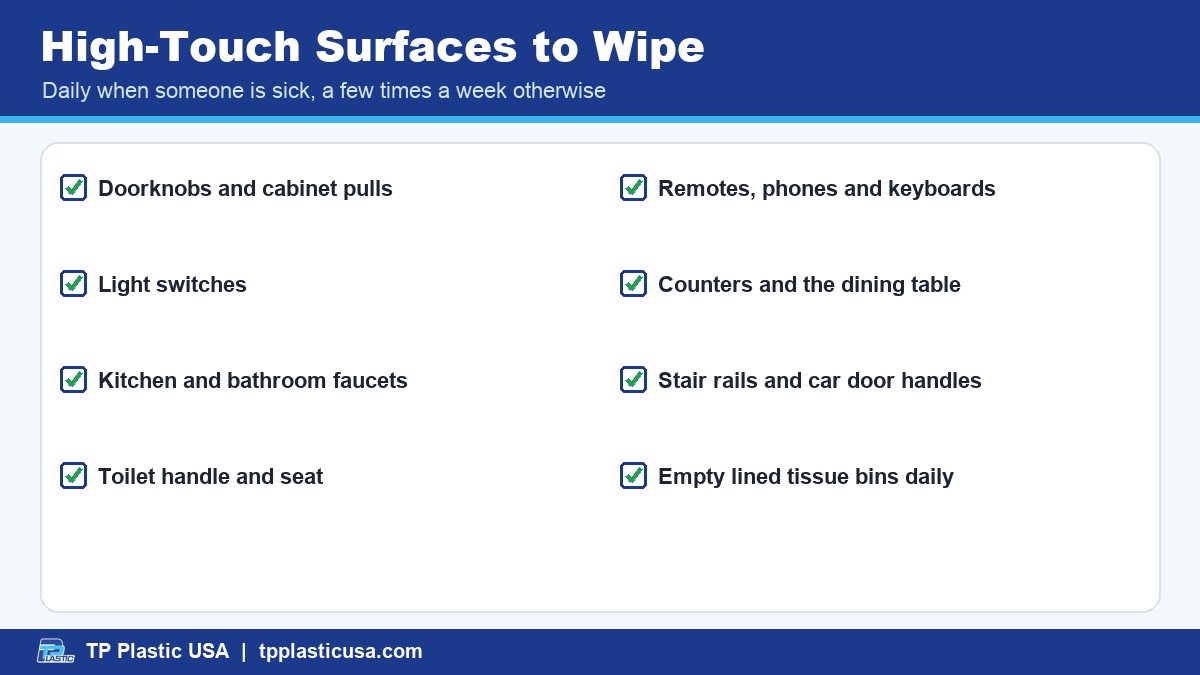
Focus your effort where hands go most often. Wipe these daily when someone is sick, and a few times a week the rest of the season:
- Doorknobs, cabinet pulls and the fridge handle
- Light switches
- Faucet handles in the kitchen and bathroom
- Toilet flush handle and seat
- TV remotes, game controllers and shared tablets (follow the maker’s cleaning instructions)
- Phones and keyboards
- Kitchen counters and the dining table
- Stair railings and car door handles
Keep a caddy with cleaning cloths, your cleaner and a box of disposable gloves in one spot so the routine takes minutes, not an afternoon. Use separate cloths for the bathroom and the kitchen, and toss them in the wash after each session so you are not spreading grime from one room to the next. Paper towels work well for quick wipes of the toilet handle and the bathroom faucet.
Gloves Make the Job Easier
Disposable gloves protect your hands from harsh cleaning products and keep you from touching used tissues and soiled items directly. Thin TPE gloves are handy for quick wipe-downs and trash runs. For more ideas, read our guide to using disposable gloves at home.
Use a fresh pair for each task, take them off carefully by peeling them inside out, throw them away, and then wash your hands with soap and water. Gloves are a helpful extra, not a substitute for hand washing.

A small lined bin keeps used tissues contained in one place.
Tissue Bins and a Separate Sick-Room Trash
Used tissues piling up on a nightstand is one of the least pleasant parts of cold season. A small lined bin solves that.
- Place a small trash can with a liner next to the bed or couch of anyone who is sick.
- Use bags with a drawstring so you can close them without touching what’s inside. Our drawstring trash bags come in small sizes, such as the Size S, 3 gal, 16 x 17 in roll, a handy size for small bedside and bathroom bins.
- Empty the bin at least once a day. Pull the drawstring, tie it, and take it straight to the outdoor can.
- Keep a separate bin in the sick room so used tissues don’t end up in the kitchen trash.
If the smell of an overflowing kitchen can is a problem during a busy week, our tips on trash can odor control can help.
Laundry and Bedding
Laundry is part of flu season cleaning too. Wash towels, pillowcases and sheets from the sick room more often than usual, using the warmest water the care label allows, and dry them completely. Carry dirty laundry in a basket or bag rather than holding it against your clothes, and wash your hands after loading the machine. Give everyone their own hand towel during cold season, and swap kitchen towels daily.
A Simple Flu Season Cleaning Routine
Here’s a routine that’s easy to stick with from October through March:
- Daily: wipe kitchen counters, faucet handles and the dining table; empty tissue bins.
- Every other day: wipe doorknobs, light switches, remotes and phones.
- Weekly: clean bathrooms fully, wash bedding and towels, and wipe stair rails and car handles.
- When someone is sick: do the high-touch list daily, keep a lined bin by their bed, and wash their bedding more often.
And through it all, wash your hands often with soap and water, especially before eating and after blowing your nose. It’s simple, and public health agencies recommend it year after year. A stocked pantry and supplies also help; see our home emergency kit checklist for ideas.
Frequently Asked Questions
How often should I clean during flu season?
Clean high-touch surfaces a few times a week, and daily if someone in your home is sick.
Do I need to disinfect, or is cleaning enough?
Regular cleaning removes many germs. Many families also disinfect high-touch spots when someone is ill. If you do, follow the product label, including the contact time.
Should I wear gloves when emptying tissue bins?
Gloves keep your hands off used tissues and are a nice extra. Either way, wash your hands with soap and water afterward.
Want to stock up for the season? Browse our disposable gloves and aprons to keep your cleaning caddy ready.


