


Walk into any produce department and the roll of bags near the apples is one of the most-used items in the store. Get the size or thickness wrong and shoppers double-bag, rolls run out mid-shift, or bags split at the checkout. This guide focuses on one decision: how to choose produce bags on a roll for a grocery store, market or deli, by size, thickness, bags per roll and print. If you want the general background on roll bags, start with our HDPE and LDPE roll bags guide, then come back here to match specs to your produce department.
HDPE vs LDPE Produce Bags on a Roll
The first choice is material. Both are polyethylene, but they feel and perform differently.
- HDPE is thin, slightly crinkly and semi-clear. It is strong for its thickness, so a 12–15 mic HDPE bag can handle a typical load of fruit or vegetables. HDPE gives you more bags per roll, which means fewer roll changes.
- LDPE is soft, glossy and very clear. It is thicker (25–40 mic in our range) and stretches before it tears, which helps with sharp or pointed items. Shoppers can see produce clearly through it.
Most grocery stores use HDPE for the main produce aisle and keep LDPE for items where clarity or extra softness matters, such as bulk foods, bakery items or pointy produce. For a deeper comparison, see our posts on HDPE bags and LDPE bags.

Place produce bag rolls near high-volume items like apples and citrus.
Common Produce Bag Sizes and What Fits
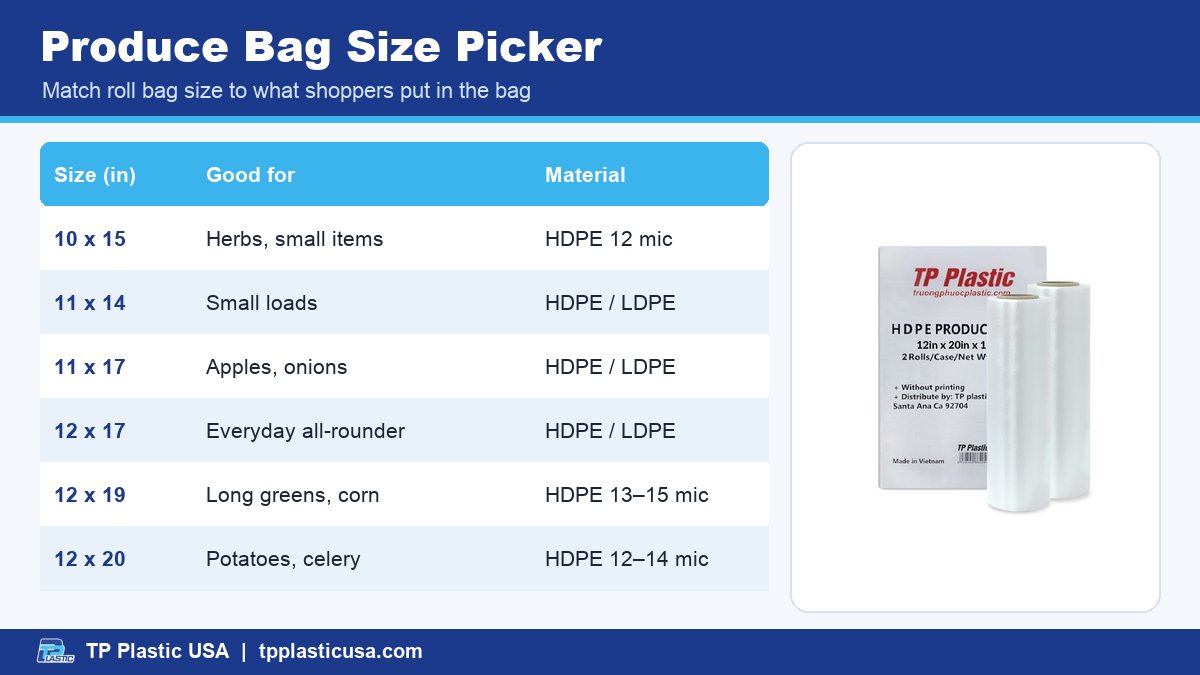
Bag sizes are listed as width x length in inches. Here is how our roll sizes line up with typical produce department use. These are practical guidelines; test a few bags with your own items before you standardize.
| Size | Good for | Our options |
|---|---|---|
| 10in x 15in | Herbs, garlic, small peppers, a handful of limes | HDPE 12 mic, 364 pcs/roll |
| 11in x 14in | Small loads, cherries, green beans, mushrooms | HDPE 13 mic “Warning” print; LDPE 25/30/40 mic |
| 11in x 17in | General produce: apples, oranges, onions | HDPE 12–13 mic; LDPE 25/30/40 mic |
| 12in x 17in | Everyday all-rounder, slightly wider for bulky fruit | HDPE 11–15 mic; LDPE 30/40 mic |
| 11in x 19in / 12in x 19in | Long items: leeks, bunched greens, corn | HDPE 13–15 mic; LDPE 11×19 in 25/30/40 mic |
| 12in x 20in | Larger loads: potatoes, celery, family-size buys | HDPE 12–14 mic |
One size or two?
Many smaller stores run a single all-purpose size such as 11×17 or 12×17 and add a longer size (12×19 or 12×20) near leafy greens and bunched items. Larger stores often place a smaller roll near herbs and specialty items so shoppers don’t waste a full-size bag on a few ounces.
Thickness: How Many Microns Do You Need?
Produce bag thickness is usually listed in microns (mic). One mil equals 25.4 microns, so a 12 mic bag is just under 0.5 mil. Our plastic thickness guide covers the conversion in detail.
- HDPE 11–12 mic – lightest option; good for everyday produce and high-volume aisles.
- HDPE 13–15 mic – a step up for heavier loads like potatoes, citrus in bulk or root vegetables.
- LDPE 25 mic – soft and clear; suits bakery items, bulk bins and lighter loads.
- LDPE 30–40 mic – thicker and more puncture-tolerant; useful for pointed or heavier items and for deli or meat counters that want a sturdier bag.
Thicker is not always better. A thicker bag means fewer bags per roll and more roll changes. Match thickness to what shoppers actually put in the bag.

HDPE bags on roll, 12in x 20in x 12 mic, 810 pieces per roll.
Bags per Roll and Restocking Time
Bags per roll affects your labor as much as your supply budget. A roll that runs out at 5 p.m. on a Saturday is a problem. Compare the counts:
- HDPE 12×20 12 mic – 810 pcs/roll, great for busy aisles.
- HDPE 12×20 12 mic – 216 pcs/roll, for smaller stores or low-traffic spots.
- HDPE 10×15 12 mic, natural – 364 pcs/roll.
- HDPE 12×17 11 mic “Garden Fresh” – 671 pcs/roll.
- LDPE 12×17 40 mic – 73 pcs/roll, heavy and clear.
All of our roll bags ship 4 rolls per case. A good habit: note how many rolls each station uses per week, then set a reorder point so you always have at least one spare case on hand.
Print Options: Plain, “Warning” or “Garden Fresh”
Print is more than decoration. Consider:
Plain (no print)
Maximum visibility of the produce and a clean look. Good for bakery, bulk foods and stores with their own labels. Options include plain HDPE on roll and our clear LDPE 11×14 bags.
“Warning” print
Our “Warning” bags carry a printed safety message, a popular choice for stores where children are around. If you need specific wording, ask us to confirm the exact print before you order. Sizes include 11×14, 12×17 and 12×19 at 15 mic.
“Garden Fresh” print
A friendly produce-themed print that signals “fresh” without adding your own branding. Available in 12×17 x 11 mic and 12×20 x 14 mic. If you want your own logo instead, see our guide to custom printed HDPE/LDPE bags.

The right size and roll count keep the aisle stocked and shoppers happy.
Dispensers and Placement Tips
Rolls work best on a simple roll holder or dispenser mounted at waist-to-chest height. A few tips:
- Place rolls at both ends of the produce section and near high-volume items like bananas, apples and potatoes.
- Put a smaller-size roll near herbs and specialty items.
- Feed the roll so bags pull from the top; it helps shoppers find the perforation.
- Keep spare rolls close by in a closed carton, away from sunlight and heat.
- Train staff to check rolls at the start of each shift.
Frequently Asked Questions
What is the most common produce bag size?
Sizes around 11×17 and 12×17 inches are popular all-rounders. Many stores add a longer 12×19 or 12×20 roll for leafy greens and bulky items.
Should I choose HDPE or LDPE produce bags?
HDPE gives more bags per roll and is strong for its thickness, making it the usual pick for the main aisle. LDPE is softer and clearer, which suits bulk foods, bakery and sharper items.
Why do bags per roll vary so much?
Bag size and thickness both change how many bags fit on a roll. Thin HDPE bags pack many more per roll than thick LDPE bags of a similar size.
Ready to set up your produce department? Browse HDPE bags and LDPE bags, or request a quote for case pricing.


