


Nothing ruins a beautiful campsite faster than someone else’s trash: a torn bag of chips under a picnic table, foil in the fire ring, a scatter of wrappers after raccoons found an open bag. Leave no trace camping is the simple idea that you leave a site as clean as you found it, or cleaner. The hard part is the planning. This guide covers how to pack, store and carry out trash so your campsite stays clean, wildlife stays wild and the next campers get the same view you did.
What Leave No Trace Camping Means
Leave No Trace is a widely used set of outdoor ethics built around a few core ideas: plan ahead, camp on durable surfaces, dispose of waste properly, leave what you find, minimize campfire impact, respect wildlife and be considerate of others. Trash touches almost every one of them. The golden rule is short: pack it in, pack it out. Whatever you bring into camp leaves with you, including food scraps, peels and small bits of packaging.
Always check the rules for the park or forest you’re visiting. Some areas have specific requirements for food storage, fires or waste.

A dedicated trash spot keeps camp tidy from day one.
Pack Your Trash Kit Before You Leave
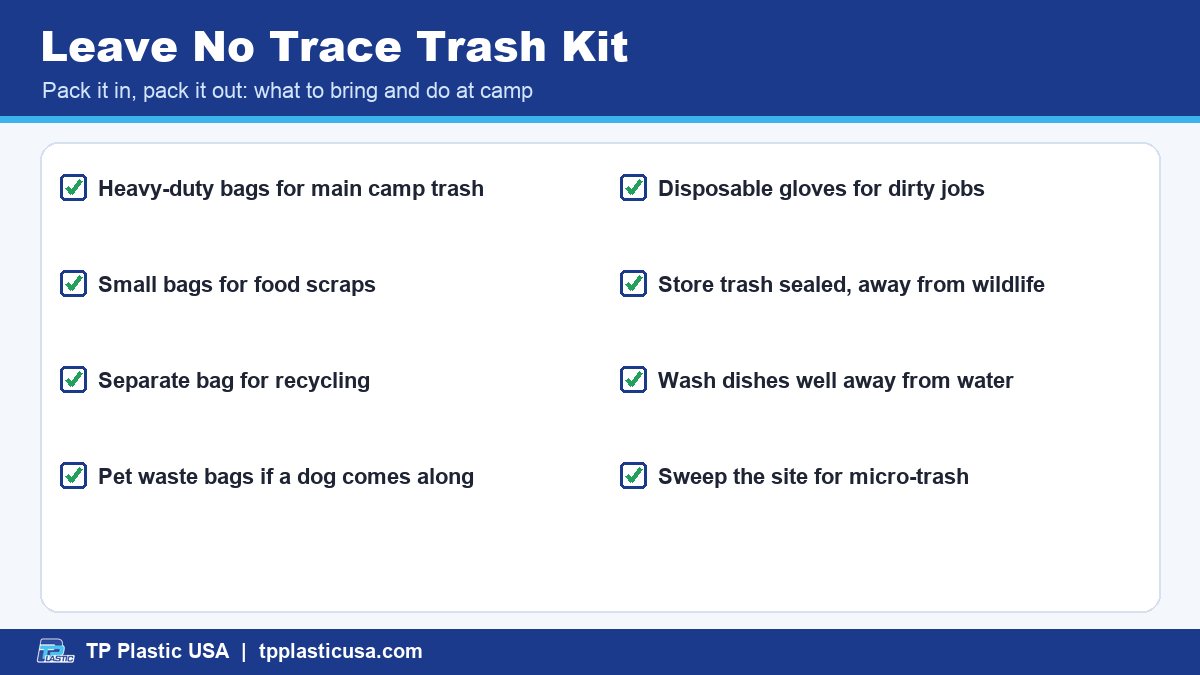
A little prep at home makes camp cleanup easy. Put together a small trash kit:
- Two or three heavy-duty trash bags for the main camp trash. Thicker bags resist punctures from cans, sticks and bones. A 33–38 gal 1.5 mil bag is a good all-round size for a car campsite.
- Small bags for food scraps so leftovers and peels stay sealed and don’t leak into the main bag. Small drawstring bags close quickly with one pull.
- A separate bag for recycling if you plan to sort cans and bottles at home or at a campground station.
- Pet waste bags if a dog is coming along. See our dog walking essentials for more tips.
- Disposable gloves for picking up grimy trash or cleaning out the fire ring.
- Zip-top bags or containers to repack food at home and cut down on packaging you’d have to carry out.
For more gear ideas, see our roundup of travel and camping plastic products.
Repack Food to Create Less Trash
The less packaging you bring, the less you carry out. Before the trip:
- Remove outer cardboard boxes and extra wrappers.
- Pre-measure meals into reusable containers.
- Crack eggs into a sealed container, or pack powdered options.
- Plan portions carefully so you don’t end up with piles of leftovers.
Keep Trash Sealed and Away From Wildlife
Animals are drawn to the smell of food and trash. Once they learn a campsite is a food source, they come back, which is bad for them and for future campers.
At a car campsite
- Keep trash tied off and stored in a closed vehicle or a campground bear box when you’re away or asleep, if allowed.
- Use campground dumpsters where available and close the lid firmly.
- Never leave trash bags sitting out on a picnic table overnight.
In the backcountry
- Store food and trash in a bear canister, bear bag or other approved storage where it’s required.
- Keep food, trash and scented items like toothpaste together in that storage, away from your tent.
A plastic bag on its own won’t stop a bear, but sealing trash inside a bag first helps contain smells and leaks inside your canister or bear box.
Wash Dishes the Right Way
Dishwater and food bits can pollute streams and lakes and attract animals.
- Scrape plates into your food scrap bag first.
- Carry water well away from lakes and streams; a common guideline is about 200 ft.
- Use only a small amount of camp soap if needed, or just hot water.
- Strain dishwater and pack out the food bits, then scatter the water widely.

A final sweep for micro-trash is the last step before heading home.
Leave No Trace Camping Checklist Before You Go Home
Before you pull out, walk the whole site slowly and look at the ground:
- Pick up micro-trash: twist ties, bottle caps, foil scraps, cigarette butts, food crumbs.
- Check the fire ring for foil, cans or half-burned trash. Make sure the fire is completely out and cold to the touch.
- Look under tables, around the tent pad and in nearby bushes.
- Tie off all trash bags and double-check they’re secure for the drive.
- Leave natural items like rocks, plants and wood where you found them.
- Pick up one extra piece of someone else’s litter. It adds up.
Handling Pet Waste on the Trail
Pet waste isn’t just unpleasant; it can wash into water sources. Bag it, tie it off and carry it out or put it in a trash bin. Don’t leave filled bags on the side of the trail “for later.” A roll of pet poop bags clips easily to a leash or pack.
Frequently Asked Questions
What does “pack it in, pack it out” mean?
It means everything you bring to camp, including trash and food scraps, leaves with you. Nothing gets buried, burned or left behind.
Can I burn trash in the campfire?
It’s best not to. Packaging often doesn’t burn completely and leaves debris in the fire ring. Pack it out instead, and follow local fire rules.
Are food scraps like apple cores okay to toss in the woods?
No. Scraps take a long time to break down, look unsightly and can teach animals to seek out people. Pack them out with the rest of your trash.
Getting your camp kit ready? Pack a few heavy-duty trash bags and leave every site better than you found it.


