


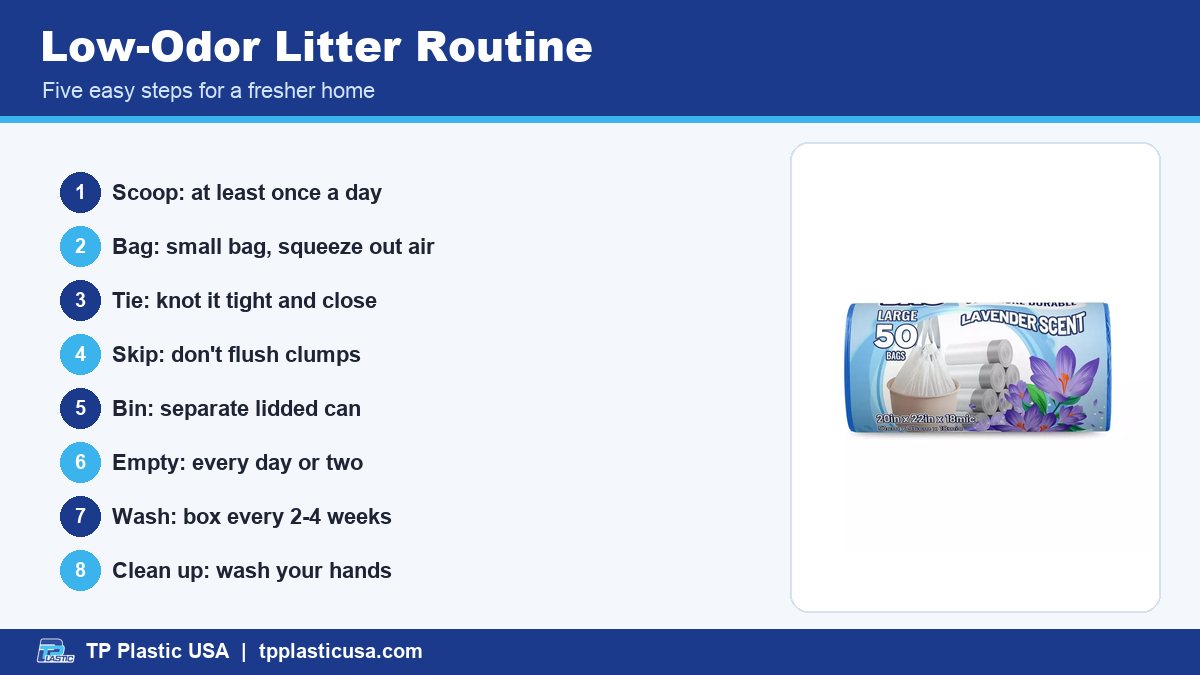
Cats are wonderfully tidy animals, but their litter box is another story. If you’ve ever opened the kitchen trash and been hit by a wave of ammonia, you know that how you get rid of used litter matters as much as how often you scoop. Good cat litter disposal keeps your home smelling fresh, keeps your cat happy to use the box, and makes the whole chore faster.
Here’s a simple, low-odor system you can set up in a few minutes: what to scoop into, how to seal it, where to put it, and what to avoid.

Keep a scoop and a roll of small bags right next to the box.
Step 1: Scoop Every Day
The single best odor-control tip is also the simplest: scoop at least once a day, and twice if you have more than one cat. Clumps left in the box keep releasing smell, and many cats will avoid a dirty box, which can lead to accidents elsewhere.
Keep your scooping kit right next to the box so it takes less than two minutes:
- A sturdy slotted scoop.
- A roll of small bags within arm’s reach.
- A small lidded bin or caddy for the bags and scoop.
- A pair of disposable gloves if you prefer not to touch anything.
Step 2: Bag It Small and Tie It Tight
Instead of dumping clumps into a big kitchen trash bag where they sit for days, scoop straight into a small bag and seal it right away.
- Use small, strong bags. Compact bags on a roll, like pet waste bags, are the perfect size for a day’s clumps. Our 9 x 13 in bags tear off one at a time from the roll.
- Squeeze out the air before you tie it. Less trapped air means less smell escaping later.
- Tie a tight knot as close to the contents as you can.
- Double-bag only when needed, such as on hot days or when the bag will wait a while before trash day. There’s no need to double every bag.
If you’re buying for a multi-cat household, a shelter, or a pet business, our guide to buying pet waste bags in bulk explains how to plan quantities.
Step 3: Don’t Flush Cat Litter
It’s tempting to flush clumps, and some litters are even labeled “flushable,” but it’s generally a bad idea:
- Plumbing: clumping litter is designed to absorb liquid and swell, which can contribute to clogs in pipes and septic systems.
- Water systems: many municipalities and wastewater agencies advise against flushing pet waste because treatment systems aren’t designed for it.
- Local rules: some areas specifically discourage or restrict it. Check with your city or water utility.
For most homes, bagging and trashing is the simplest and safest approach to cat litter disposal.
Step 4: Take It Out, Don’t Let It Wait
Where the bagged litter goes next is where odor problems usually start. A few habits help:
- Skip the kitchen can. Keep a small lidded bin near the litter box or in the garage just for sealed litter bags.
- Line that bin with a small drawstring bag so you can lift everything out at once. Our scented drawstring bags (Size S, 3 gal) fit small bins well.
- Empty it every day or two into your outdoor trash can.
- Keep the outdoor can closed and in the shade if possible, especially in summer.
For more ways to keep bins fresh, see our tips on stopping trash can odors.

Move sealed bags outdoors every day or two to keep odors down.
Step 5: Deep-Clean the Box Regularly
Even with daily scooping, litter eventually absorbs odors. Plan a full change and scrub on a regular schedule. Many owners do it every two to four weeks, depending on the litter type and number of cats.
- Put on disposable gloves. Our TPE gloves are an easy, affordable choice for quick dirty jobs.
- Pour all the old litter into a large trash bag, tie it, and take it straight outside.
- Wash the box with warm water and mild, unscented dish soap. Strong scented cleaners can put cats off the box.
- Rinse and dry completely before refilling.
- Add fresh litter to the depth your cat likes (often around 2 to 3 in).
- Replace plastic boxes that are deeply scratched, since scratches can hold odors.
If you’re pregnant or have a weakened immune system, it’s commonly recommended that someone else handle litter duty, or that you wear gloves and wash your hands well afterward. Ask your doctor for advice.
Extra Cat Litter Disposal Tips for a Low-Odor Home
- Location: choose a spot with some airflow, away from where you cook and eat.
- A mat: a litter mat under the box catches tracked granules.
- One box per cat, plus one: a widely used guideline that helps spread out use.
- Baking soda: a thin layer under fresh litter can help absorb odors.
- Wash your hands after scooping, even when you wore gloves.
- Safety: keep plastic bags and rolls stored away from children and pets.
Walking a dog too? The same small bags work on walks. See our dog walking essentials for a quick checklist.
Frequently Asked Questions
What is the best way to dispose of cat litter?
Scoop daily into a small bag, squeeze out the air, tie it tight, and put it in a lidded outdoor trash can. Avoid flushing it.
Can I put cat litter in my kitchen trash?
You can, but it’s the most common cause of trash odors. A separate small lidded bin near the box, emptied every day or two, works better.
How often should I completely change cat litter?
Many owners fully change and wash the box every two to four weeks, more often with several cats or non-clumping litter.
Want an easier routine? Keep a roll of scented trash bags near your litter station.


