


Winter is hard on feet. Cold air outside, dry heat inside, long hot showers, and a season of boots and socks all add up, and by January many of us are dealing with rough, split skin on the backs of our feet. The good news: cracked heels usually respond well to a simple, consistent routine you can do at home in a few minutes a day.
Here’s why heels crack in cold weather, a step-by-step routine to smooth them out, the mistakes that make things worse, and when it’s time to see a professional.

Dry indoor heat and cold air can leave heels rough and split.
Why Heels Crack in Winter
The skin on your heels is naturally thicker than most skin on your body, and it doesn’t have many oil glands. When it dries out, it loses flexibility. Every step presses the heel pad outward, and dry, stiff skin can split along the edges instead of stretching. Common winter triggers include:
- Cold, dry outdoor air that pulls moisture from skin.
- Indoor heating, which lowers humidity in your home.
- Long, hot showers or baths that strip natural oils.
- Open-back slippers and shoes that let the heel pad spread with each step.
- Standing for long hours, especially on hard floors.
- Not drinking enough water and skipping moisturizer when your feet are hidden in socks.
A Simple Nightly Routine for Cracked Heels
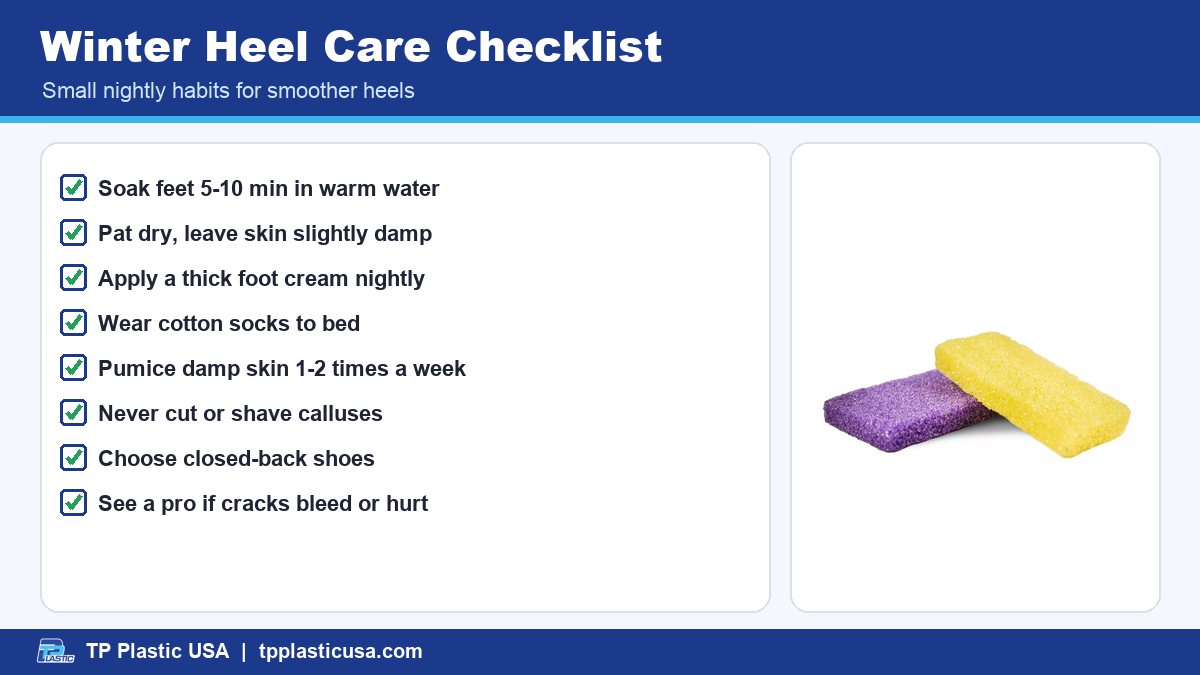
Consistency matters more than any single product. Try this routine most nights through the cold months:
- Soak briefly. Five to ten minutes in warm (not hot) water softens thick skin. Adding a little mild soap is fine.
- Pat dry. Leave the skin slightly damp rather than bone dry.
- Moisturize generously. Use a thick foot cream or balm. Many people look for ingredients like urea, lactic acid, or petrolatum, but follow the product’s directions and patch-test if you have sensitive skin.
- Seal it in with socks. Cotton socks overnight help the cream stay on your feet instead of your sheets.
Most people notice softer heels within a couple of weeks when they stick with it.
Gentle Exfoliation: Once or Twice a Week
Moisturizer works better when there isn’t a thick layer of dead skin in the way. That’s where gentle exfoliation comes in, but “gentle” is the key word.
How to use a pumice stone or pad
- Use it on damp, softened skin, right after a soak or shower.
- Rub lightly in small circles or one direction across the rough area.
- Stop after a minute or two per heel, or as soon as the skin feels smoother. Don’t aim to remove everything at once.
- Rinse, pat dry, and moisturize right away.
- Limit it to once or twice a week.
A small pumice is easy to control. Our mini pumice (3.15 x 1.38 x 0.47 in) fits comfortably in the hand, and a pedicure sanding pad is another option for smoothing rough spots. Our pumice pad guide covers technique in more detail.

A mini pumice is easy to control for gentle heel smoothing.
Keep your tools clean
Rinse your pumice after each use and let it dry completely. Don’t share foot tools with others, and replace them when they get worn or grimy.
Mistakes That Make Cracked Heels Worse
- Over-filing. Aggressive scrubbing can leave skin raw, sore and more likely to split.
- Cutting or shaving calluses. Razors and blades can cause cuts and infections. Leave that to a professional.
- Filing dry skin hard. Always work on damp, softened skin.
- Very hot water. It feels good in winter but dries skin out further.
- Skipping days. Heels bounce back quickly when you stop moisturizing.
- Going barefoot on cold floors or wearing open-back shoes all day.

Moisturize nightly and seal it in with cotton socks.
Daily Habits That Help Protect Your Heels
- Wear closed-back shoes or supportive slippers at home.
- Choose socks that fit well and change them if they get damp.
- Use a humidifier in the bedroom if your home feels very dry.
- Keep showers warm and short, and moisturize soon after.
- Drink water through the day.
- Treat yourself to an at-home spa night. Some people enjoy a warm paraffin wax treatment for hands and feet; our paraffin wax bags guide explains how it works.
If you’d like to turn heel care into a full at-home pedicure, follow our step-by-step guide to doing a pedicure at home.
When to See a Doctor or Podiatrist
Most dry, cracked heels are a cosmetic nuisance, but some situations call for professional advice. Talk to a doctor or podiatrist if:
- You have diabetes, poor circulation, or reduced feeling in your feet. In that case, ask a professional before using pumice or files at home.
- Cracks are deep, bleeding, or painful to walk on.
- You notice redness, swelling, warmth, or discharge.
- Your heels don’t improve after a few weeks of regular care.
This article is general information, not medical advice. A professional can look at your feet and recommend what’s right for you.
Frequently Asked Questions
How long does it take to heal cracked heels?
With nightly moisturizing and gentle weekly exfoliation, many people see smoother heels in one to two weeks. Deeper cracks can take longer.
Should I use a pumice stone on wet or dry feet?
Use it on damp, softened skin after a soak or shower, with light pressure. Filing dry skin hard can irritate it.
Can I cut off hard skin on my heels?
It’s best not to. Cutting calluses at home risks cuts and infection. Stick to gentle exfoliation and see a professional for thick calluses.
Stocking up for winter spa nights at home or at your salon? Take a look at our nail and pedicure supplies.


