


Most pallets you see on a loading dock are wrapped in clear film, but opaque options exist for good reasons. Black stretch film hides what is on the pallet, makes certain shipments stand out, and blocks light from reaching the load. Clear film, on the other hand, lets anyone read labels and check the load without cutting it open. This guide explains when each color makes sense so you can choose with confidence.

Clear film shows the load; black film keeps it private.
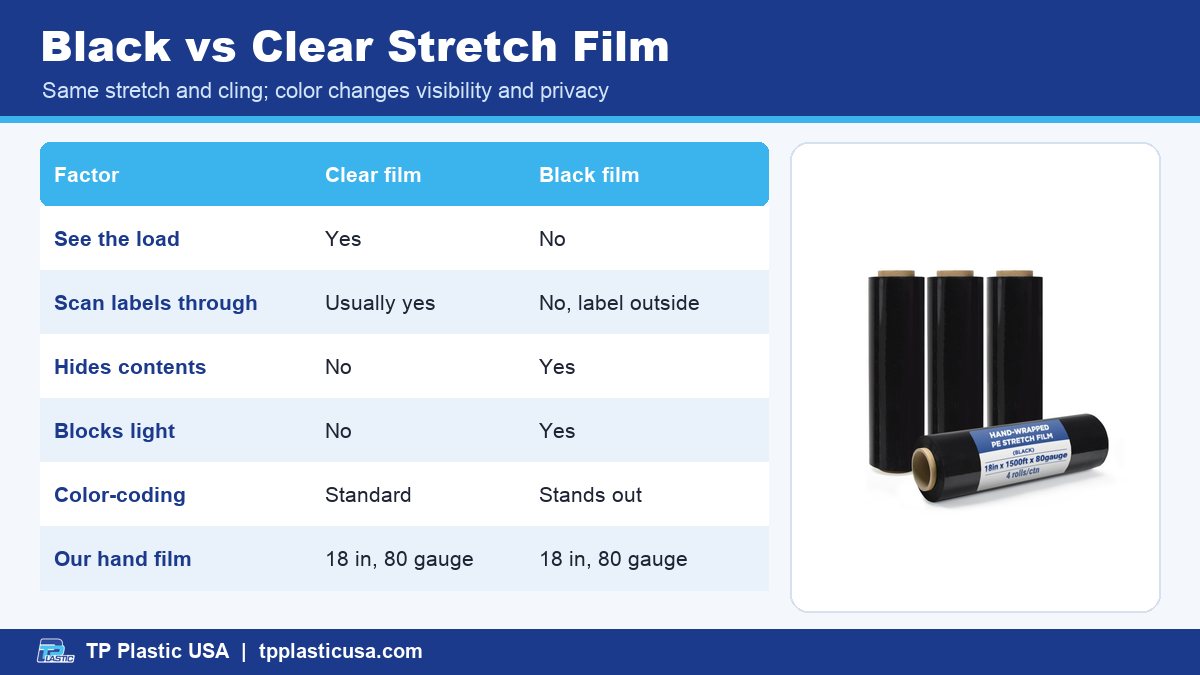
Clear vs Black Stretch Film at a Glance
Color does not change how stretch film works. Both colors cling, stretch and hold loads the same way, and the gauge (thickness) and roll length still matter most for performance. If you need a refresher on the basics, start with what PE stretch film is and our stretch film thickness guide. Color is about visibility, privacy and organization.
| Factor | Clear film | Black film |
|---|---|---|
| See the load | Yes, easy to inspect | No, contents hidden |
| Scan barcodes through film | Usually yes | No, label on the outside |
| Privacy and theft deterrence | Low | High |
| Blocks light | No | Yes |
| Stands out on the dock | No | Yes, easy to spot |
When Black Stretch Film Is the Better Choice
Privacy and security
If a pallet holds high-value goods such as electronics, branded merchandise or anything that tempts theft, clear film basically advertises what is inside. Black film hides the contents from anyone walking past in a warehouse, on a truck or at a shared dock. It won’t stop a determined thief, but it removes the easy visual cue and makes tampering easier to notice, since a torn opaque wrap is obvious.
Keeping light off the load
Some products are better kept out of direct light while they are stored or shipped, such as certain printed packaging, colored goods or items staged near dock doors and skylights. Opaque film blocks light from reaching the cartons. It is a practical extra layer, not a replacement for proper storage, so still keep sensitive products out of sunlight when you can.
Color-coding shipments
Black film is an easy visual system. Many teams use it to mark a specific customer, a priority order, returns, outbound vs inbound freight, or goods on hold. Staff can spot these pallets from across the building without reading a single label.
A clean, uniform look
Mixed cartons of different sizes and prints look tidy under black wrap. Some shippers like this for retail deliveries or trade show freight.
When Clear Stretch Film Makes More Sense
- Scanning and labeling. With clear film, barcodes and shipping labels under the wrap can often still be read and scanned. With black film, labels must go on the outside.
- Quick inspections. Receivers can count cartons and check for crushed boxes without cutting the film.
- Everyday general freight. For most routine shipments, clear film is the standard and the simplest option.
- Checking your wrap quality. Clear film makes it easier to see gaps, loose layers or missed base wraps, which ties into avoiding the common stretch film mistakes.

Black hand film, 18 in x 1500 ft x 80 gauge, 4 rolls per carton.
What About White Stretch Film?
White film is another opaque option. It hides contents like black film but has a lighter look that some businesses prefer, and it contrasts well with a marker if you write on the wrap. Our white film is machine film at 120 gauge, available as 20 in x 5000 ft and 30 in x 5000 ft rolls. It’s a good fit for operations that already use a turntable wrapper and want opaque loads at volume. Not sure whether you need hand or machine film? See hand vs machine stretch film.

With opaque film, labels always go on the outside of the wrap.
Our Black and Clear Stretch Film Options
Black hand film
- Black hand film 18 in x 1500 ft x 80 gauge, 4 rolls per carton
- Black hand film 18 in x 1000 ft x 80 gauge, 4 rolls per carton
The 1000 ft roll is lighter to handle; the 1500 ft roll means fewer roll changes.
Clear hand film for comparison
Because these clear rolls share the same width and gauge as the black rolls, it is easy to run both side by side and use color purely for sorting.
Tips for Using Black Film on Pallets
- Label on the outside. Apply shipping labels and pallet tags after wrapping, and consider a second label on another side.
- Tell your receivers. If a customer is used to clear wrap, let them know opaque loads are intentional.
- Document the load. Take a quick photo before wrapping so you have a record of the contents.
- Keep the same wrapping standard. Use the same base wraps, overlap and tension you would with clear film. The load-shifting guide explains why.
- Use color consistently. A color system only works if everyone follows it, so write it down and post it at the wrapping station.
Frequently Asked Questions
Is black stretch film weaker than clear film?
Color alone doesn’t make film weaker. Compare gauge and roll specs; our black and clear 18 in hand films are both 80 gauge.
Can you scan barcodes through black stretch film?
No. Because the film is opaque, place labels and barcodes on the outside of the wrap.
Why do some warehouses use both colors?
Many use clear film for routine freight and black film to flag special pallets such as high-value goods, holds or specific customers.
Want to try black film alongside your clear rolls? Browse our hand stretch film or request a quote for mixed cartons.


