


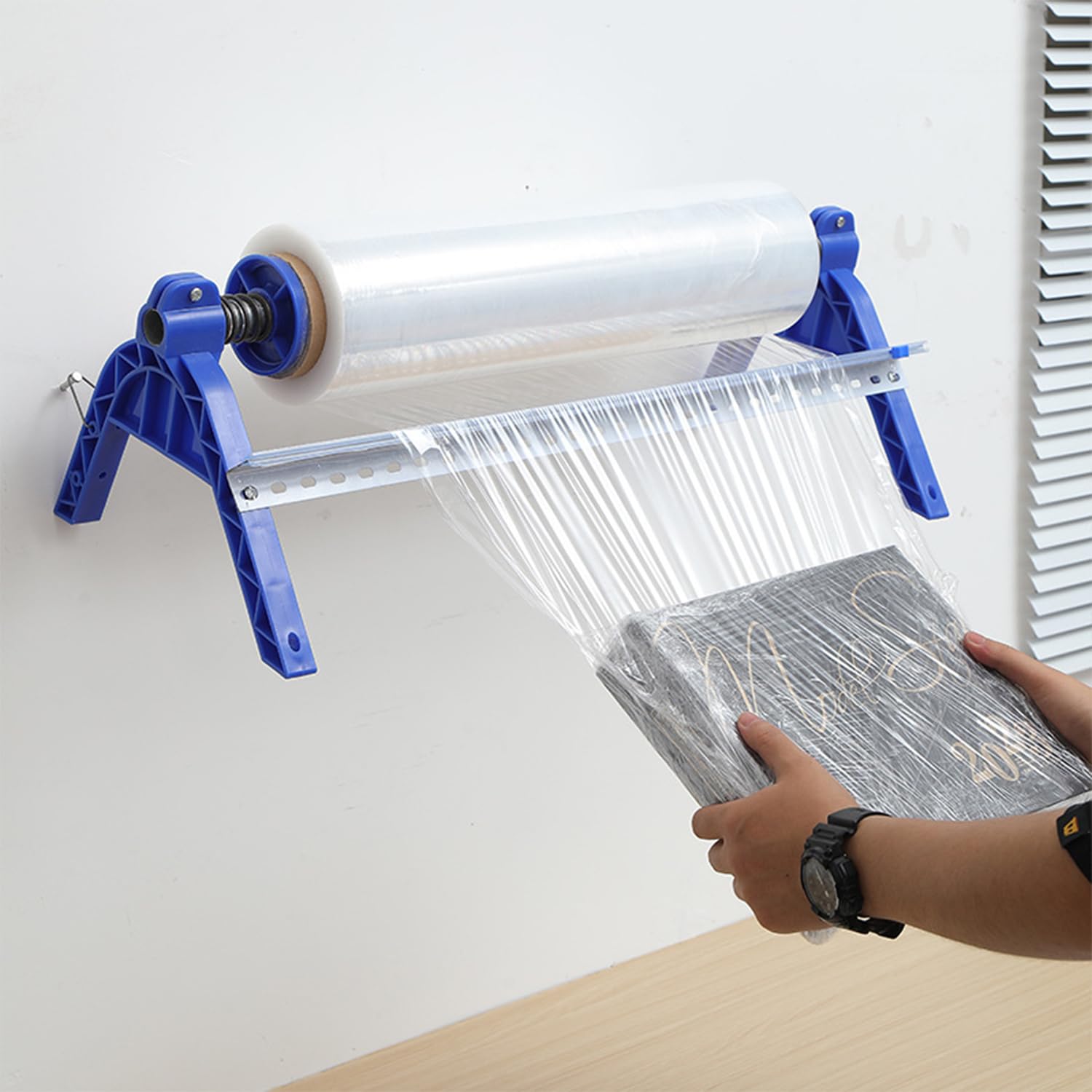
Stretch film is one of the most important materials used in warehouses, manufacturing plants, and distribution centers to secure palletized loads during storage and transportation. However, businesses often face a common decision: Should you use hand stretch film or machine stretch film?
Both options serve the same purpose—stabilizing pallet loads—but they differ in application method, efficiency, cost, and consistency. Choosing the right type depends largely on shipment volume, labor availability, and operational scale.
This guide explains the key differences between hand stretch film and machine stretch film, helping businesses determine which option best fits their operations.
Table of Contents
ToggleWhat Is Stretch Film?
Stretch film is a highly elastic plastic film used to wrap products on pallets. When stretched and applied properly, the film creates containment force, holding boxes and products tightly together.
This containment helps prevent:
Load shifting during transportation
Carton collapse
Product damage
Pallet instability
Stretch film is typically made from LLDPE (Linear Low-Density Polyethylene) because of its excellent stretch and tear resistance.
What Is Hand Stretch Film?
Hand stretch film is designed to be applied manually by workers.
Operators typically wrap pallets using handheld rolls, walking around the pallet while pulling the film tightly.
Characteristics of Hand Stretch Film
Lightweight rolls
Shorter roll length
Easier manual control
Designed for smaller operations
Hand stretch film is common in warehouses that wrap pallets occasionally or in smaller volumes.
Advantages of Hand Stretch Film
Lower Initial Investment
Hand wrapping requires no special equipment, making it accessible for small businesses or startups.
Flexibility
Workers can wrap irregular loads easily and adjust wrapping patterns as needed.
Ideal for Low Volume
If a facility wraps only a few pallets per day, manual wrapping can be sufficient.
Limitations of Hand Stretch Film
Inconsistent Tension
Manual wrapping depends heavily on operator strength and technique, which can lead to:
Uneven film tension
Weak containment force
Higher risk of load shifting
Slower Wrapping Speed
Manual wrapping takes more time compared to automated systems.
Higher Material Usage
Workers often use more film than necessary, increasing material cost.
What Is Machine Stretch Film?
Machine stretch film is designed for automated or semi-automated pallet wrapping machines.
These machines rotate pallets while applying stretch film under controlled tension.
Characteristics of Machine Stretch Film
Longer roll length
Higher pre-stretch capability
Consistent application
Optimized for automated systems
Machine stretch film is commonly used in medium to high-volume distribution centers.
Advantages of Machine Stretch Film
Consistent Wrapping Quality
Machines apply film with precise tension, ensuring uniform containment force across the pallet.
Faster Wrapping Speed
Automated systems wrap pallets significantly faster than manual methods.
Reduced Material Usage
Machine film can stretch much more efficiently, meaning less film is needed per pallet.
Lower Labor Requirements
Automation reduces the need for manual wrapping labor.
Limitations of Machine Stretch Film
Higher Initial Equipment Cost
Pallet wrapping machines require upfront investment.
However, businesses often recover these costs through material savings and improved efficiency.
Less Flexibility for Irregular Loads
Extremely irregular pallet shapes may require adjustments or manual wrapping.
Comparing Hand Stretch Film and Machine Stretch Film
|
Feature |
Hand Stretch Film |
Machine Stretch Film |
|---|---|---|
|
Application Method |
Manual wrapping |
Automated wrapping machine |
|
Best For |
Low-volume operations |
High-volume warehouses |
|
Material Efficiency |
Lower |
Higher |
|
Wrapping Speed |
Slower |
Faster |
|
Consistency |
Operator dependent |
Highly consistent |
|
Equipment Required |
None |
Pallet wrapping machine |
When Should You Use Hand Stretch Film?
Hand stretch film works best for businesses that:
Wrap fewer than 10–15 pallets per day
Have limited warehouse space
Need flexibility for irregular loads
Want minimal upfront investment
Small warehouses, retail backrooms, and startups often rely on manual wrapping.
When Should You Use Machine Stretch Film?
Machine stretch film is ideal for facilities that:
Wrap large numbers of pallets daily
Operate distribution centers
Require consistent load stability
Want to reduce labor costs
Automation becomes increasingly beneficial as shipping volume grows.
Cost Comparison: Short-Term vs Long-Term
At first glance, hand stretch film seems cheaper because it requires no machinery.
However, machine wrapping often reduces:
Film consumption
Labor time
Load damage risk
Over time, high-volume operations frequently find that machine stretch film lowers overall operating costs.
Worker Safety Considerations
Manual pallet wrapping can lead to:
Back strain
Repetitive motion injuries
Worker fatigue
Automated wrapping systems reduce these risks by minimizing physical labor.
Improving Pallet Stability with the Right Film
Regardless of the method used, proper stretch film should provide:
Strong puncture resistance
Reliable stretch recovery
Consistent thickness
Quality film ensures loads remain stable throughout transportation.
Choosing the Right Option for Your Business
The decision between hand stretch film and machine stretch film should consider:
Daily pallet volume
Labor availability
Budget for equipment
Operational efficiency goals
As businesses grow, many transition from hand wrapping to machine wrapping to improve productivity.
Final Thoughts
Both hand stretch film and machine stretch film serve the same fundamental purpose—securing palletized loads for safe transportation. The difference lies in how efficiently that task is performed.
Hand stretch film works well for smaller operations with limited volume, while machine stretch film offers significant advantages in speed, consistency, and long-term cost savings for larger facilities.
Understanding the strengths of each option allows businesses to choose the solution that best supports their packaging and logistics operations.


