


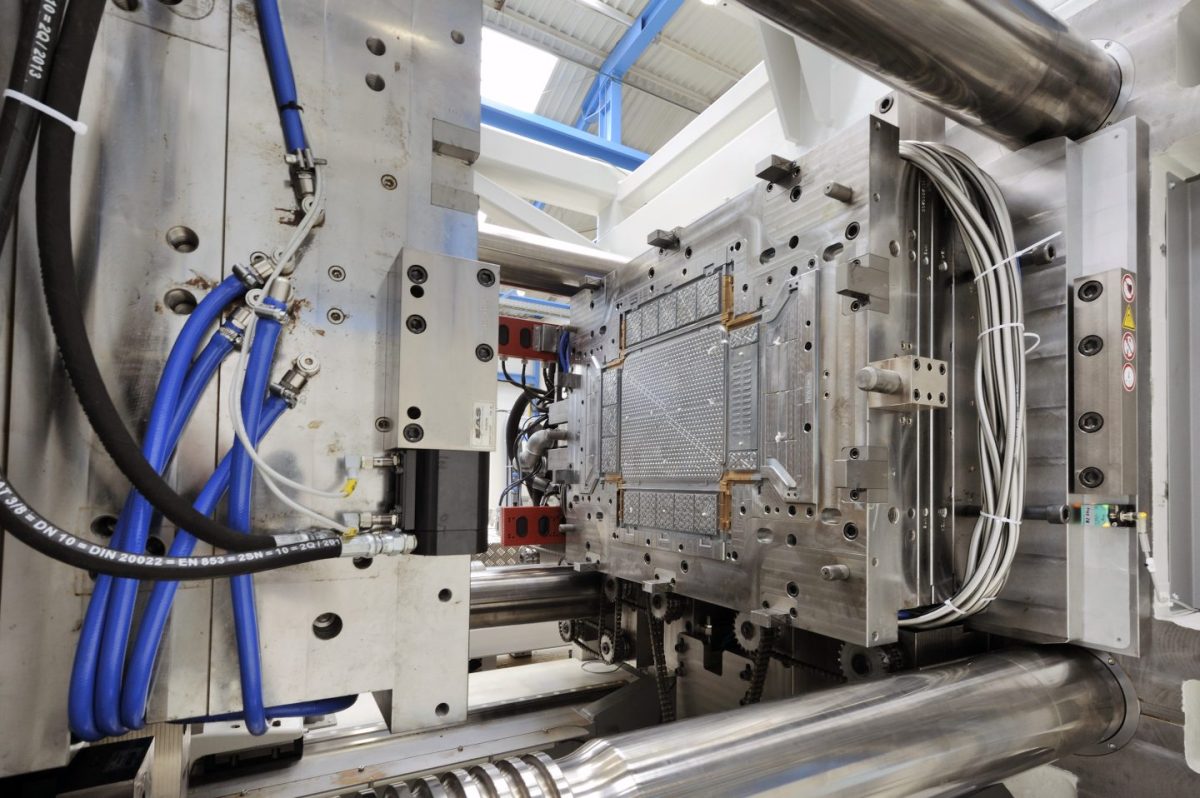
Choosing the right plastic manufacturing process is crucial for businesses that need high-quality plastic parts. Two of the most widely used methods are Injection Molding and Thermoforming, but they serve different purposes depending on cost, production volume, and material requirements.
At TP Plastic USA, we provide high-quality plastic materials that are compatible with both processes. This guide will help you understand the key differences between Injection Molding and Thermoforming, so you can choose the best method for your business.
Table of Contents
Toggle1. What is Injection Molding?
📌 Overview:
Injection Molding is a high-precision manufacturing process where molten plastic is injected into a metal mold at high pressure, then cooled and solidified into a finished shape.
📌 Best for:
✔ High-volume production of plastic parts.
✔ Complex designs with tight tolerances.
✔ Durable, repeatable, and uniform plastic parts.
📌 Common Applications:
- Automotive parts (dashboards, bumpers).
- Medical devices (syringes, equipment casings).
- Consumer products (bottle caps, electronics housings).
💡 TP Plastic USA Insight:
We provide high-quality thermoplastics like ABS, Polycarbonate, and Polypropylene, commonly used in Injection Molding applications.
2. What is Thermoforming?
📌 Overview:
Thermoforming is a cost-effective plastic forming process where a plastic sheet is heated until soft, then shaped using a mold through vacuum or pressure.
📌 Best for:
✔ Large, lightweight parts with simple designs.
✔ Lower production costs for small-to-medium volumes.
✔ Thinner plastic parts compared to Injection Molding.
📌 Common Applications:
- Packaging (clamshells, trays, food containers).
- Automotive interior panels and protective covers.
- Medical trays and disposable equipment.
💡 TP Plastic USA Insight:
We supply durable plastic sheets like Polycarbonate, PVC, and Acrylic, commonly used in Thermoforming.
3. Key Differences Between Injection Molding & Thermoforming
|
Factor |
Injection Molding |
Thermoforming |
|---|---|---|
|
Production Volume |
Best for high-volume, mass production |
Best for low-to-medium volume production |
|
Cost |
Higher upfront costs (molds are expensive) |
Lower tooling costs, cheaper for prototypes |
|
Material Thickness |
Ideal for thicker and solid parts |
Works best for thin and lightweight parts |
|
Design Complexity |
Handles complex and precise designs |
Suitable for simpler, larger designs |
|
Lead Time |
Longer production time due to mold setup |
Faster turnaround for prototypes & small runs |
|
Customization |
Limited once molds are made |
Easier to modify & adjust during production |
💡 TP Plastic USA Recommendation:
✔ Use Injection Molding if you need high precision, durability, and mass production.
✔ Use Thermoforming if you need fast production, lightweight designs, and cost efficiency.
4. Pros & Cons of Injection Molding
✅ Advantages of Injection Molding:
✔ High precision & repeatability – Produces uniform plastic parts with tight tolerances.
✔ Great for large production runs – Cost per part decreases with higher volumes.
✔ Compatible with many plastic materials – Works well with ABS, PP, PC, and Nylon.
❌ Disadvantages of Injection Molding:
🚫 High initial costs – Mold tooling can be expensive.
🚫 Longer lead times – Mold design and testing take time.
🚫 Limited flexibility – Once the mold is made, modifications are costly.
💡 TP Plastic USA Insight:
If you choose Injection Molding, make sure to use high-performance plastics like ABS or Polycarbonate for durability.
5. Pros & Cons of Thermoforming
✅ Advantages of Thermoforming:
✔ Lower cost & faster production – Ideal for short production runs and prototypes.
✔ Easier to modify – Designs can be adjusted quickly.
✔ Great for large, thin-walled products – Perfect for packaging and enclosures.
❌ Disadvantages of Thermoforming:
🚫 Not ideal for high precision – May have slight variations in thickness.
🚫 Less durable than injection-molded parts – Best suited for non-structural applications.
🚫 Material waste – Excess plastic from trimming is common.
💡 TP Plastic USA Insight:
For Thermoforming, choose Polycarbonate, Acrylic, or PVC sheets for strength and durability.
6. Which Plastic Manufacturing Method is Right for Your Business?
📌 Choose Injection Molding if:
✅ You need mass production of identical plastic parts.
✅ You require high precision and durability.
✅ You are manufacturing automotive, medical, or consumer products.
📌 Choose Thermoforming if:
✅ You need cost-effective, low-to-medium volume production.
✅ Your parts are large, lightweight, and require quick turnaround.
✅ You are making packaging, trays, and enclosures.
💡 TP Plastic USA Recommendation:
Both methods have their advantages—choose the one that aligns with your production goals and budget.
7. Why Businesses Choose TP Plastic USA for Their Manufacturing Needs
🔹 High-quality plastics for both Injection Molding & Thermoforming.
🔹 Expert guidance on selecting the right materials for your project.
🔹 Bulk ordering & fast delivery across the USA.
🔹 Sustainable & recyclable plastic options for eco-conscious businesses.
📦 Need plastic materials for Injection Molding or Thermoforming? Order from TPPlasticUSA.com today!
Final Thoughts: Making the Right Choice for Your Plastic Production
💡 Key Takeaways:
✔ Injection Molding is best for high-volume, precise, and durable parts.
✔ Thermoforming is best for cost-effective, lightweight, and large plastic products.
✔ Choosing the right method depends on cost, production volume, and design complexity.
📩 Still unsure which method to choose? Contact TP Plastic USA for expert recommendations!
🔥 Which plastic manufacturing method does your business use? Let us know in the comments! 💬


