Table of Contents
ToggleIntroduction
In today's competitive business environment, controlling packaging costs is crucial for profitability. While many companies focus on reducing raw material costs or optimizing logistics, packaging waste—particularly stretch film overuse—often goes unnoticed.
By making smart stretch film choices, businesses can cut costs while ensuring better load stability, reduced damage, and improved efficiency. In this guide, we’ll explore how to save money on stretch film while maintaining high packaging standards.

Good Stretch Film is better, reducing cost and safer to be transported
1. Choose the Right Gauge for Cost Efficiency
Many companies overspend on thick stretch films, assuming they offer better protection. However, modern high-performance stretch films can achieve the same strength at lower gauges, reducing both material usage and costs.
Understanding Stretch Film Gauge
- 80-gauge film – Traditional standard, often overused
- 60- to 70-gauge film – Offers similar strength with less material
- High-performance films (40- to 50-gauge) – Engineered for lower costs and greater stretchability
✔️ Key Tip: Switching to a lower-gauge, high-performance stretch film can reduce material costs by 20-30% without compromising load stability.
|
Gauge Thickness |
Recommended Usage |
Strength & Durability |
Cost Efficiency |
|---|---|---|---|
|
40 Gauge |
Light loads, small packages, and low-volume applications. |
Low - Best for lightweight items |
High - Uses minimal material, lowest cost |
|
50 Gauge |
Medium loads with minimal shifting, cost-effective for retail packaging. |
Medium - Suitable for stable loads |
High - Affordable for medium loads |
|
60 Gauge |
General-purpose wrapping, suitable for most warehouse applications. |
Good - Balanced strength and cost |
Moderate - Best balance between cost and performance |
|
70 Gauge |
Heavier loads with slight shifting, provides extra protection. |
High - Extra support for shifting loads |
Lower - More material used, higher cost |
|
80 Gauge |
Heavy-duty wrapping, ideal for industrial and warehouse use. |
Very High - Industrial-grade strength |
Low - Expensive but necessary for heavy loads |
|
90+ Gauge |
Extremely heavy or irregular loads, maximum puncture resistance. |
Maximum - Ideal for extreme applications |
Very Low - Most expensive but essential for heavy-duty protection |
2. Reduce Waste with Pre-Stretched Film
Traditional stretch film requires more force to apply, leading to excessive material waste and higher costs.
Why Pre-Stretched Film Saves Money
✅ Uses 30-50% less material per pallet
✅ Reduces worker fatigue (easier to apply)
✅ Improves load containment for better transport protection
Who Benefits Most?
- Warehouses wrapping light to medium loads
- Businesses aiming to cut down on plastic waste
- Companies with high pallet turnover
📈 Savings Insight: Switching to pre-stretched film can reduce film usage by up to 50%, cutting packaging costs significantly.
3. Use Machine Stretch Film for Large-Scale Savings
If you’re wrapping 20+ pallets per day, manual wrapping can be costly and inefficient. Upgrading to a stretch wrap machine can provide significant savings in both labor and film usage.
Benefits of Machine Stretch Film:
🚀 Automated Efficiency – Reduces labor costs and application time
💰 Lower Material Use – Ensures consistent stretch, minimizing film waste
🔄 Stronger Load Stability – Prevents shifting and damage during transit
How Much Can You Save?
Businesses switching to machine stretch wrap save up to 60% on film and labor costs, making it a profitable long-term investment.

TP Plastic USA machine stretched film
4. Minimize Product Damage Costs with the Right Film
Using the wrong stretch film can lead to damaged products, returns, and additional shipping expenses.
Common Issues Due to Poor Film Choice:
🔺 Film too weak? Loads shift, leading to damage.
🔺 Film too thick? Increases costs unnecessarily.
🔺 Low-quality film? Tears easily, requiring extra wraps.
Solution:
✔ Analyze your load type – Heavier loads need stronger, high-performance films
✔ Consider environmental conditions – UV-resistant film is ideal for outdoor storage
✔ Use vented stretch film – Perfect for fresh produce and perishable goods
5. Buy in Bulk & Partner with a Reliable Supplier
Many businesses buy stretch film in small quantities, leading to higher per-unit costs. Purchasing in bulk and working with a reliable supplier can significantly cut costs.
What to Look for in a Stretch Film Supplier:
✔ Competitive pricing for bulk purchases
✔ High-quality, consistent film to prevent unnecessary waste
✔ Fast and reliable shipping to avoid downtime
💡 Why Choose TP Plastic USA?
At TP Plastic USA, we offer premium-quality stretch films at wholesale prices, helping businesses reduce costs while ensuring superior load protection.

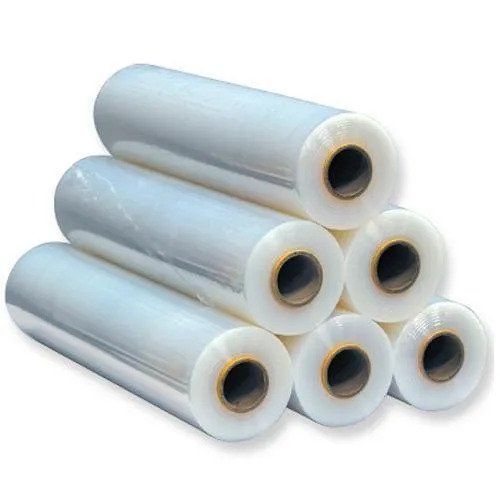
Stacked Stretch Film
6. Conduct a Stretch Film Audit to Identify Savings
Many businesses don’t realize how much money they’re losing due to inefficient stretch film use. A simple audit can uncover cost-saving opportunities.
Steps to Conduct a Stretch Film Cost Audit:
🔹 Measure how much film you use per pallet – Are you overwrapping?
🔹 Compare different film types – Can you switch to a lower gauge?
🔹 Assess load stability – Are you using too much stretch film to compensate for a poor wrap technique?
🔹 Test pre-stretched film or machine wrapping – Would an upgrade save labor and materials?
📊 Fact: Businesses that optimize their stretch film usage reduce costs by up to 40% annually.
|
Checklist Item |
Why It Matters |
|---|---|
|
Measure film usage per pallet |
Identifies overuse and potential cost savings. |
|
Analyze load stability |
Ensures products remain secure during transport. |
|
Compare different film thickness (gauges) |
Helps reduce unnecessary material costs. |
|
Consider pre-stretched film |
Minimizes waste and lowers application effort. |
|
Evaluate manual vs. machine wrapping |
Machine wrapping reduces labor costs and film waste. |
|
Check for film breakage or excess waste |
Film tearing leads to extra wraps and higher expenses. |
|
Assess if UV-resistant or vented film is needed |
Prevents product damage and spoilage in specific conditions. |
|
Calculate cost savings from bulk purchases |
Bulk purchases lower per-unit costs. |
|
Review supplier pricing and reliability |
Working with a reliable supplier ensures consistent quality. |
|
Test alternative stretch film types for cost-effectiveness |
Testing different films can uncover more affordable options. |
Final Thoughts: Small Changes, Big Savings
Stretch film is an essential part of packaging and logistics, but many businesses are overspending without realizing it. By choosing the right stretch film, reducing waste, and optimizing wrapping methods, you can significantly cut costs while improving load security.
Action Plan to Reduce Stretch Film Costs:
✅ Evaluate your current film usage
✅ Switch to pre-stretched or lower-gauge film where possible
✅ Consider machine wrapping for large-scale operations
✅ Partner with a trusted supplier for better pricing and reliability
💡 Need Expert Guidance?
At TP Plastic USA, we help businesses like yours save money on stretch film while ensuring top-tier packaging protection. Contact us today for a customized stretch film solution!