


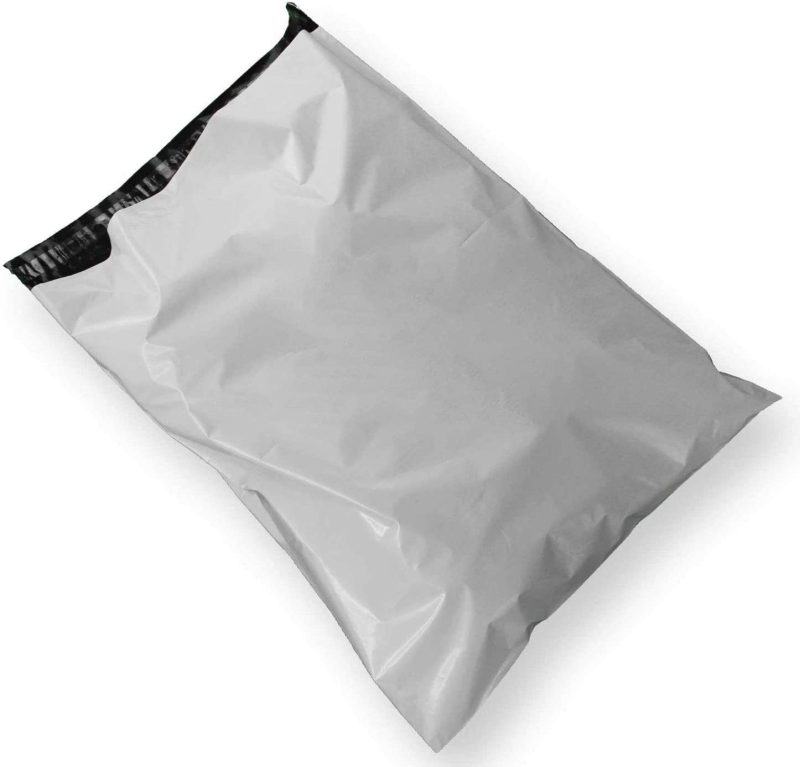
A Real-World Packaging Decision Guide for E-Commerce and Fulfillment Operations
Poly mailers have become one of the most common shipping formats in modern e-commerce. They are lightweight, compact, and usually cost less per unit than corrugated boxes. For many businesses, switching to poly mailers feels like a smart, obvious move to reduce shipping expenses.
Yet in real fulfillment operations, many teams eventually discover an uncomfortable reality:
poly mailers reduce cost on paper, but increase cost in practice.
The problem is not that poly mailers are bad. The problem is that they are often used in situations where they are not designed to perform. When that happens, the savings disappear through higher damage rates, returns, customer complaints, and internal rework.
This article breaks down the real cost difference between poly mailers and boxes, not by unit price, but by what happens after the package leaves your warehouse.
1. Why Poly Mailers Became the Default Choice
Poly mailers grew in popularity because they solved several immediate problems for fast-growing e-commerce brands:
-
lower material cost compared to boxes
-
reduced dimensional weight charges
-
faster packing time
-
lower storage and handling space
For lightweight, soft, and flexible products, these advantages are real and measurable. Many businesses successfully reduce shipping spend by moving the right SKUs into poly mailers.
Problems begin when poly mailers are treated as a universal replacement for boxes instead of a tool designed for specific conditions.
2. The Unit Price Trap: Why Buyers Misjudge Packaging Cost
Most packaging decisions start with unit price comparisons:
-
one poly mailer costs less than one box
-
total shipment weight decreases
-
per-order shipping appears cheaper
However, fulfillment cost is not defined at checkout. It is defined after delivery.
True packaging cost includes:
-
damaged product rates
-
return handling
-
reshipment costs
-
customer service time
-
brand trust impact
When these factors are ignored, packaging decisions optimize the wrong metric.
3. When Poly Mailers Perform Exceptionally Well
Poly mailers are highly effective when used in the right applications.
They work best when:
-
products are soft or compressible
-
items have no rigid edges
-
weight is evenly distributed
-
presentation expectations are moderate
Typical successful use cases include:
-
apparel and textiles
-
soft accessories
-
non-fragile consumer goods
-
items that naturally absorb impact
In these scenarios, poly mailers reduce both shipping cost and packing time without increasing risk.
4. Where Poly Mailers Start to Create Problems
4.1 Lack of Structural Protection
Poly mailers provide minimal structural support. This becomes an issue when:
-
products are semi-rigid
-
items shift during transport
-
pressure concentrates on seams
Unlike boxes, poly mailers do not protect against compression from other packages. As a result, even moderate stacking pressure can deform products or stress seams.
4.2 Irregular Shapes and Pressure Points
Products with:
-
corners
-
edges
-
uneven thickness
create localized stress inside poly mailers. These pressure points increase the likelihood of tearing or seam failure during handling.
A box absorbs and distributes this stress. A poly mailer does not.
5. Shipping Distance and Handling Multiply Risk
Every shipment passes through multiple touchpoints:
-
conveyor belts
-
sorting facilities
-
loading and unloading
-
last-mile delivery
Each touchpoint adds movement, compression, and friction.
Poly mailers that perform well over short distances may fail during:
-
long-haul shipping
-
multi-zone delivery
-
high-volume carrier networks
As distance and handling increase, the performance gap between boxes and poly mailers widens.
6. Small Damage Rates Create Large Financial Losses
Even a small increase in damage or return rate can erase packaging savings.
For example:
-
a 0.5–1% increase in returns
-
multiplied across thousands of orders
-
quickly exceeds the cost difference between mailers and boxes
Damage-related returns also trigger:
-
reverse logistics
-
inspection labor
-
restocking or disposal
-
customer dissatisfaction
These costs are rarely attributed to packaging—but they should be.
7. Customer Perception Is Part of the Cost Equation
Packaging does more than protect products. It communicates value.
Poly mailers can negatively affect perception when:
-
packages arrive wrinkled or misshapen
-
products feel poorly protected
-
outer packaging appears cheap or careless
For higher-value items, boxes often signal:
-
protection
-
professionalism
-
brand reliability
Even when products arrive undamaged, packaging presentation influences repeat purchases and reviews.
8. Packing Speed vs Packing Accuracy
Poly mailers are often chosen to increase packing speed. This works only when the application fits.
When poly mailers are used incorrectly, packers:
-
add extra padding
-
reinforce seams
-
slow down to avoid damage
In these cases, speed advantages disappear and labor cost increases.
Boxes may require slightly more assembly time, but often:
-
reduce decision-making
-
simplify packing
-
lower error rates
9. Hybrid Packaging Strategies Outperform Single-Format Approaches
High-performing operations rarely choose between poly mailers and boxes universally.
Instead, they:
-
segment SKUs by risk
-
assign mailers to low-risk products
-
reserve boxes for fragile or high-value items
This hybrid approach:
-
controls cost
-
reduces damage
-
protects customer experience
Treating all products the same is usually where problems begin.
10. How to Decide What Goes in a Poly Mailer vs a Box
Before choosing packaging, ask:
-
Does the product deform under pressure?
-
Does it have rigid edges?
-
How far will it ship?
-
How sensitive are customers to presentation?
These questions reveal more than price comparisons ever will.
11. How TP Plastic USA Supports Smarter Shipping Choices
TP Plastic USA works with fulfillment teams and e-commerce brands to evaluate shipping packaging based on real-world performance, not assumptions.
Our focus is on:
-
application-based packaging selection
-
consistent quality
-
reducing damage and returns
-
balancing cost with reliability
The goal is not to push one format, but to help customers choose the right tool for each job.
Conclusion
Poly mailers are not inherently cheaper or worse than boxes. They are simply designed for different purposes.
When poly mailers are used in the right applications, they reduce cost and increase efficiency. When used incorrectly, they quietly increase damage, returns, and operational expense.
The smartest packaging decisions are not driven by unit price—but by total outcome.


