


Choosing the right trash bag is a small decision that has big operational consequences. For businesses that handle waste daily—warehouses, restaurants, offices, nail salons, and industrial facilities—the wrong bag leads to leaks, double-bagging, extra labor, and higher costs.
This guide explains how to choose trash bags correctly by capacity, thickness, and use case, so businesses can match performance to real-world needs—without overspending.
Why “One Trash Bag Fits All” Doesn’t Work
Trash varies widely:
-
Dry vs wet
-
Light vs heavy
-
Sharp vs soft
-
High-frequency vs occasional disposal
Using a single bag type for everything often causes:
-
Overuse of heavy-duty bags where not needed
-
Underperformance in high-load areas
-
Increased waste and cleanup time
Smart selection starts with understanding capacity, thickness, and application.
Understanding Trash Bag Capacity (Gallons)
Capacity is typically measured in gallons, but volume alone does not determine performance.
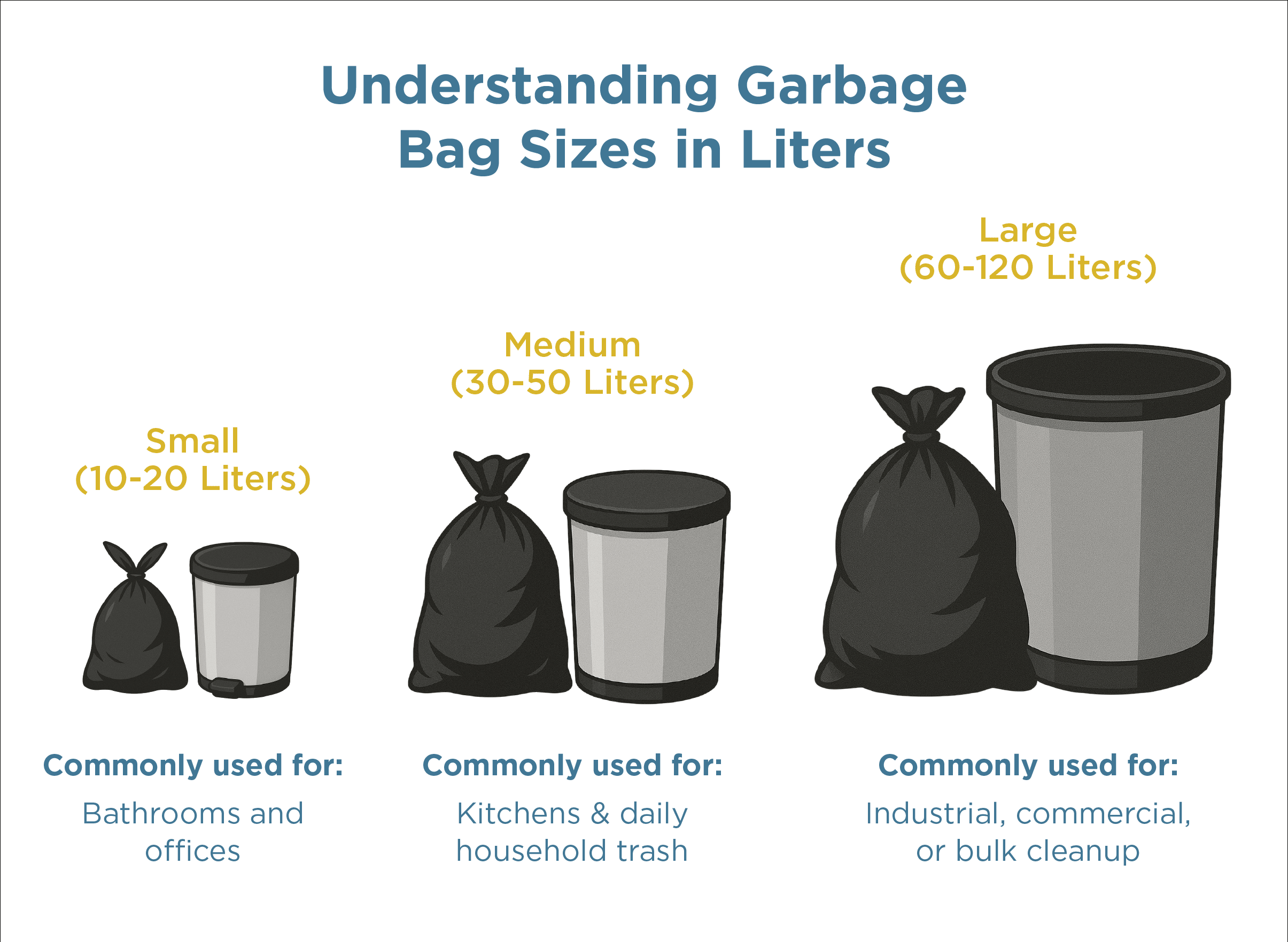
Common Capacity Ranges
-
Small (10–20 gal): Bathrooms, desks, light waste
-
Medium (30–40 gal): Offices, salons, kitchens
-
Large (55 gal): Warehouses, restaurants, back-of-house
-
Extra Large (60+ gal): Industrial and bulk waste
Tip: Always match capacity to the bin size, not just the waste volume. An oversized bag in a small bin wastes material and money.
Bag Dimensions Matter More Than Gallons
Two 55-gallon bags can perform very differently.
Key dimensions to check:
-
Width (to fit bin circumference)
-
Length (to fold over rim securely)
-
Bottom seal design (flat vs star seal)
Incorrect sizing leads to:
-
Slipping bags
-
Tearing at the rim
-
Reduced usable capacity
Thickness Explained: Mil vs Micron
Trash bag thickness is commonly measured in:
-
Mil (U.S. standard)
-
Micron (metric)
General Thickness Guidelines
-
Thin (0.5–0.7 mil): Dry, light waste
-
Medium (0.8–1.2 mil): Mixed office or salon waste
-
Heavy (1.3+ mil): Wet, heavy, or sharp waste
Thicker does not always mean better—proper design and seal type matter just as much.
Seal Type Affects Strength
Flat Seal Bags
-
Common and economical
-
Best for light, dry waste
-
Higher risk of corner leaks under load
Star Seal Bags
-
Even weight distribution
-
Stronger bottom
-
Better leak resistance
-
Ideal for heavy or wet trash
Choosing the right seal can allow thinner film to outperform thicker flat-seal bags.
Matching Trash Bags to Real-World Use Cases
Offices & Administrative Spaces
-
Waste type: Paper, light packaging
-
Recommended: Medium capacity, thinner bags
-
Focus: Clean removal and cost efficiency
Nail Salons & Spas
-
Waste type: Towels, wipes, water residue
-
Recommended: Medium thickness, leak-resistant bags
-
Focus: Hygiene and reliability
Restaurants & Food Service
-
Waste type: Wet food waste
-
Recommended: Star seal, higher thickness
-
Focus: Leak prevention and load strength
Warehouses & Fulfillment Centers
-
Waste type: Cardboard, stretch film, mixed debris
-
Recommended: Large capacity, star seal
-
Focus: Durability and efficiency
Industrial & Manufacturing
-
Waste type: Heavy or sharp materials
-
Recommended: Heavy-duty bags
-
Focus: Tear resistance and safety
Load Weight vs Thickness: A Common Misunderstanding
Trash bag failure often happens because:
-
Weight exceeds design limits
-
Waste is unevenly distributed
-
Sharp edges puncture thin film
Selecting the right bag means considering:
-
Weight, not just volume
-
Waste shape
-
Moisture content
This prevents over-specifying thickness—or worse, under-specifying it.
Cost Control Through Proper Selection
Using the wrong bag type increases cost through:
-
Double-bagging
-
Frequent replacement
-
Cleanup labor
-
Safety incidents
Proper selection allows businesses to:
-
Use thinner bags where appropriate
-
Reserve heavy-duty bags for critical areas
-
Reduce overall bag consumption
Buying Trash Bags Wholesale: Why It Helps
Wholesale purchasing allows:
-
Consistent specifications
-
Lower per-unit cost
-
Stable inventory supply
-
Multiple bag types for different zones
Retail packs often lack spec detail and consistency, making optimization difficult.
Storage & Dispensing Considerations
Efficient storage improves daily workflow:
-
Star seal bags pack more compactly
-
Color-coding by thickness helps staff choose correctly
-
Centralized dispensing reduces misuse
Simple systems prevent accidental overuse of heavy-duty bags.
Environmental Considerations
Using the right bag for the job:
-
Reduces plastic waste
-
Minimizes double-bagging
-
Lowers overall material usage
Efficiency is often more sustainable than simply choosing thicker bags.
Common Mistakes to Avoid
-
Choosing by price alone
-
Ignoring seal type
-
Using one bag for all waste streams
-
Oversizing “just to be safe”
These habits quietly increase operating costs.
Final Thoughts: Trash Bags Are an Operational Tool
Trash bags are not a commodity—they are tools. When chosen correctly by capacity, thickness, and use case, they:
-
Reduce mess
-
Improve safety
-
Control costs
-
Support smooth daily operations
Businesses that optimize trash bag selection gain small savings every day—which add up significantly over time.


