


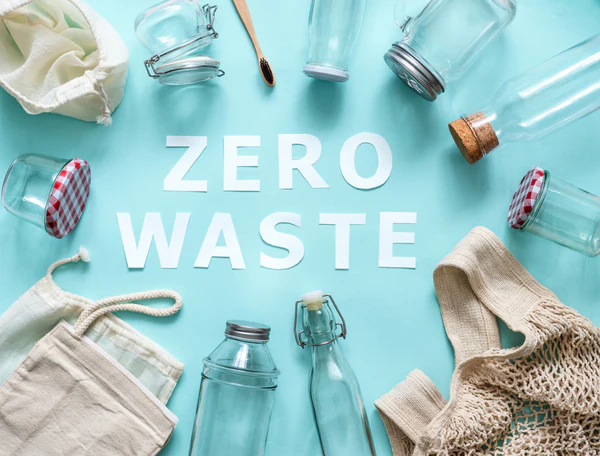
In a world where sustainability is reshaping every industry, zero waste plastic manufacturing is no longer an ideal — it’s a requirement for responsible growth.
At TP Plastic USA, we see this transformation not just as a compliance goal, but as an opportunity to redefine efficiency, quality, and environmental accountability across our entire supply chain.
Zero waste means nothing is wasted — every scrap of plastic, every offcut, every byproduct finds its way back into value creation. Through advanced reprocessing, recycling, and circular design, TP Plastic USA is leading the movement toward a future where plastic production and environmental protection coexist.
Table of Contents
Toggle1. The New Meaning of “Zero Waste” in Plastic Manufacturing
In plastic production, zero waste doesn’t mean “no waste ever happens.” It means every output — even scrap — is accounted for and reused, reprocessed, or repurposed to create something new.
This approach transforms the conventional manufacturing model. Instead of sending leftover materials to landfills, factories capture and recycle them internally or through certified recycling partners.
At TP Plastic USA, this commitment translates into:
Internal material recovery loops for PE and LDPE film waste.
Smart regrind integration, where scrap material is re-pelletized and mixed back into new product runs.
Process optimization that reduces errors and defective output at the source.
It’s not only about saving material — it’s about designing a manufacturing ecosystem that produces less waste, uses fewer resources, and maintains consistent quality across every batch.
2. From Linear to Circular: Rethinking Plastic’s Life Cycle
Historically, manufacturing followed a linear flow:
Extract → Produce → Use → Discard.
This model fueled mass production — but also mass waste.
Zero waste manufacturing redefines that flow into a circular loop:
Design → Manufacture → Reuse → Recycle → Reinvent.
At TP Plastic USA, we’ve fully embraced this circular model across our product lines — from stretch film and mailer bags to trash bags, gloves, and aprons.
Each stage of production is engineered to support the next.
Plastic scraps from extrusion are collected, sorted, cleaned, and reprocessed into regrind pellets. These pellets are then used in secondary layers of new products, ensuring the loop stays closed.
|
Linear Model |
Circular Model |
|---|---|
|
Take resources |
Regenerate materials |
|
Produce waste |
Reuse waste |
|
One-way flow |
Closed-loop flow |
|
End-of-life disposal |
Continuous life cycle |
This circularity not only reduces environmental footprint — it creates measurable savings in raw materials and energy usage. In some production runs, internal recycling has replaced up to 25–35% of virgin resin, without compromising film clarity or tensile strength.
3. How TP Plastic USA Closes the Loop
Reaching near-zero waste status is not a single step — it’s a system built on precision, quality, and consistency.
Here’s how our process works behind the scenes:
a. Smart Segregation at Source
Each extrusion line and packaging area is equipped with sorting bins that separate:
Clean PE/LDPE offcuts
Contaminated or mixed-color scraps
Rejected or misprinted films
This early-stage sorting ensures that clean, recyclable waste is recovered efficiently — while contaminated waste is sent for external recycling through certified partners.
b. Onsite Reprocessing
Collected film trims are fed into pelletizing systems that melt, filter, and extrude the plastic into uniform regrind pellets.
These pellets can then be reintroduced into film production in controlled proportions — typically 10–30% depending on the product grade.
For example:
Stretch film: up to 20% regrind content in inner layers.
Mailing bags: 30% regrind blended with virgin LDPE for flexible durability.
Trash bags: 100% recycled content possible for industrial or non-food applications.
c. Material Quality Assurance
Every reprocessed batch is tested for:
Melt flow index (MFI)
Color and opacity stability
Tensile strength and elongation properties
This ensures recycled content meets the same performance standards as virgin materials — a crucial factor for clients demanding high quality consistency, especially in packaging used for e-commerce and logistics.
d. Supplier & Client Partnerships
Zero waste doesn’t end at our factory door.
We work closely with:
Resin suppliers to ensure consistent grade quality and recyclability.
OEM customers to design packaging that can be fully recycled.
Retail and logistics partners like Amazon and Walmart sellers to develop compliant, eco-conscious packaging.
Through this network, TP Plastic USA’s circular model extends far beyond our own operations.
4. Technology at the Core of Zero Waste
Modern sustainability depends on smart technology.
At TP Plastic USA, we invest heavily in systems that make zero waste plastic manufacturing practical and measurable.
|
Technology |
Function |
Benefit |
|---|---|---|
|
Inline edge trimmers |
Capture film edges instantly during extrusion |
Eliminates manual scrap collection |
|
Pelletizing machines |
Convert waste into reusable resin pellets |
Creates internal raw material source |
|
Vacuum conveyors & silos |
Store and feed regrind material safely |
Prevents contamination and loss |
|
Optical sensors |
Detect foreign materials or color deviations |
Maintains high-quality regrind purity |
|
Data analytics dashboards |
Track waste-to-yield ratio in real time |
Enables quick adjustments and reporting |
This technological ecosystem forms the foundation of TP Plastic USA’s operational efficiency — allowing us to measure, optimize, and continuously reduce waste over time.
5. Environmental & Economic Benefits
Zero waste isn’t just about the planet — it’s also about performance.
By integrating circular manufacturing, TP Plastic USA gains tangible economic and operational advantages:
a. Lower Raw Material Costs
Reprocessing allows us to reuse up to a third of internal plastic waste, reducing virgin resin consumption and stabilizing costs amid global price fluctuations.
b. Reduced Carbon Footprint
Each ton of reprocessed plastic saves approximately 1.5–2 tons of CO₂ emissions compared to virgin resin production — contributing to a measurable carbon reduction target.
c. Higher Product Efficiency
When recycled content is integrated with precision, it can improve film elasticity, toughness, and load retention — especially in multi-layer applications like stretch wrap or drawstring trash bags.
d. Better Compliance & Market Advantage
Retailers and brands increasingly require eco-compliance documentation.
By maintaining internal recycling records, TP Plastic USA can provide clear sustainability metrics, giving customers an advantage when meeting corporate or government packaging standards.
6. The Bigger Picture: Closing the Loop Across the Industry
The plastic industry is at a turning point.
As environmental regulations tighten and consumer expectations shift, manufacturers must prove their commitment through measurable action — not promises.
Zero waste plastic manufacturing represents the core of this transformation.
It’s not only about recycling more; it’s about designing waste out of the system.
TP Plastic USA’s model aligns with the global movement toward circular manufacturing — echoing frameworks like:
Ellen MacArthur Foundation’s Circular Economy principles
UN Sustainable Development Goals (SDG 12: Responsible Consumption and Production)
California’s Plastic Pollution Prevention and Packaging Producer Responsibility Act (SB 54)
By aligning operations with these standards, TP Plastic USA is future-proofing its business — ensuring both compliance and competitiveness as sustainability becomes the global norm.
7. Zero Waste in Practice: Product Examples
a. PE Stretch Film
Made using advanced co-extrusion technology, our stretch film incorporates recycled inner layers while maintaining a crystal-clear outer surface for load visibility.
By reusing in-house trim waste, we’ve reduced raw material input by up to 18% per batch.
b. LDPE Mailer Bags
Lightweight yet strong, our mailers integrate recycled film blends for e-commerce applications. Each bag is designed for easy recyclability — printed with standardized recycling codes (ASTM D7611).
c. Trash Bags & Liners
Manufactured with high regrind content and star-seal technology to reduce seam waste, these products demonstrate how post-industrial and post-consumer materials can form durable, functional solutions.
d. TPE/CPE Gloves & Aprons
Production optimization minimizes cutting waste, while offcuts are collected and reprocessed for non-medical-grade products. This reduces total factory waste output by approximately 15–20% annually.
8. Building a Culture of Sustainability
Technology alone cannot achieve zero waste — people do.
At TP Plastic USA, we promote a factory-wide culture where sustainability is everyone’s responsibility.
Our initiatives include:
Employee training programs on waste segregation and quality control.
Incentive systems rewarding teams that achieve waste reduction targets.
Regular audits to track waste rates and identify process improvements.
By engaging every department — from extrusion and printing to packaging and logistics — we ensure the zero-waste vision is a daily practice, not just a corporate slogan.
9. The Road Ahead: Expanding Circular Capacity
Zero waste is a journey, not a finish line.
TP Plastic USA is continuously investing in next-generation systems to push this mission further:
AI-driven recycling analytics for predictive waste management.
Integration with chemical recycling partners to handle non-reprocessable materials.
Development of biodegradable PE alternatives for specific product categories.
Expansion of take-back programs with OEM customers to close external loops.
These upcoming initiatives align with our long-term vision: to transform every part of our operation — from sourcing to shipping — into a sustainable, circular ecosystem.
The Power of a Closed Loop
The promise of zero waste plastic manufacturing is not perfection — it’s continuous improvement.
By rethinking how we design, produce, and reuse materials, TP Plastic USA demonstrates that sustainability and performance can go hand in hand.
Every roll of stretch film, every bag, every glove we make tells the same story:
That innovation and responsibility are not opposites — they’re partners in shaping a cleaner, smarter manufacturing future.
Zero waste is not the end of production — it’s the beginning of a new cycle.


