


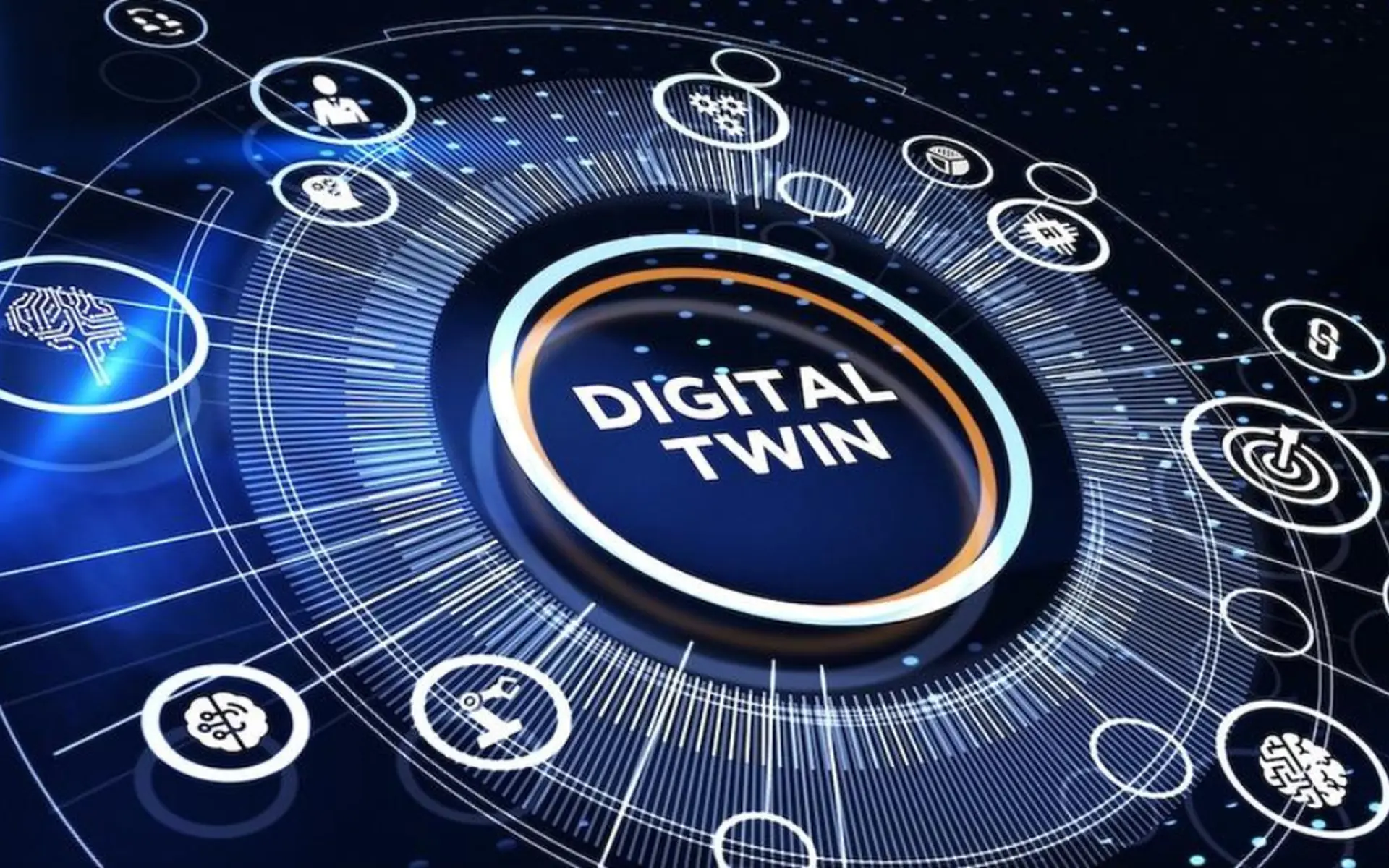
The Future of Manufacturing Is Already Here
Imagine being able to test a product before it’s ever made — to simulate extrusion flow, predict material behavior, or optimize energy use before a single machine starts running.
That’s exactly what digital twin technology makes possible.
In modern production, the concept of a digital twin in manufacturing has become one of the most powerful tools driving efficiency, accuracy, and sustainability.
For the plastic industry, where precision and consistency are everything, digital twins are revolutionizing how factories plan, test, and perfect their processes.
At TP Plastic USA, this innovation is not theoretical — it’s becoming part of how we design, optimize, and scale production across our stretch film, mailer bag, and packaging lines.
1. What Is a Digital Twin in Manufacturing?
A digital twin is a virtual replica of a physical process, product, or system.
It uses real-time data and simulation models to mirror the actual performance of machines, materials, and workflows.
In other words, it’s a digital copy of reality — allowing engineers to observe, test, and improve without interrupting real production.
In plastic manufacturing, a digital twin can model:
-
The extrusion process (temperature, screw speed, resin flow).
-
The cooling and winding stages for film consistency.
-
The stretch ratio and tensile properties of PE film.
-
The energy consumption and material waste for sustainability metrics.
This data-driven “mirror factory” enables precise control, faster innovation, and smarter decision-making across every stage of production.
2. How Digital Twins Work: The Connection Between Data and Reality
A digital twin operates through a continuous feedback loop between three layers:
-
Physical Layer – The actual factory: extrusion lines, mixers, machines, and sensors.
-
Digital Layer – A real-time software model that replicates each process.
-
Data Layer – The stream of live data connecting the two, via IoT sensors and analytics.
As sensors collect data on temperature, pressure, resin flow, and vibration, that information feeds into the digital twin model. The system then simulates potential changes — for example, how adjusting screw speed affects film thickness or tensile strength.
When the model identifies a better setup, it sends those adjustments back to the machines.
The result: continuous improvement through simulation and feedback.
3. Why the Plastic Industry Needs Digital Twin Technology
Plastic manufacturing is a game of precision. Even minor variations — a few degrees in melt temperature or 1% difference in resin ratio — can affect film clarity, strength, or elasticity.
Traditionally, these adjustments required trial and error on the production line, wasting time and material.
With digital twin simulation, manufacturers can now:
-
Test changes virtually before touching the machine.
-
Predict product performance with different materials.
-
Reduce material waste and downtime.
-
Improve consistency across production batches.
It’s like running dozens of experiments — but entirely in the digital space.
4. Applications of Digital Twins in Plastic Manufacturing
Digital twin technology can be applied to nearly every stage of plastic production.
Here’s how it transforms real-world operations:
a. Extrusion Simulation
Engineers can model how different resin grades behave under specific heat, pressure, and speed conditions — optimizing output before actual extrusion starts.
b. Material and Additive Testing
A digital twin can simulate how additives (like slip agents, UV stabilizers, or antioxidants) affect film transparency or mechanical performance, helping select the ideal blend.
c. Equipment Optimization
Machine parameters — screw geometry, die temperature, cooling airflow — can be optimized in simulation, leading to better energy efficiency and reduced mechanical stress.
d. Predictive Quality Control
By comparing virtual models with real sensor data, the system can flag potential quality deviations early, ensuring each roll meets OEM standards.
e. Maintenance Planning
Digital twins predict wear and tear on motors, heaters, and blades, allowing scheduled maintenance before issues occur.
5. How Digital Twins Reduce Waste and Improve Sustainability
Waste reduction is one of the biggest advantages of digital twin implementation.
In traditional setups, machine tuning and process changes often generate scrap film, off-spec rolls, and excess energy use.
With digital simulation, all those test runs happen virtually.
Key sustainability impacts include:
-
Lower material waste: no need for trial batches.
-
Reduced energy use: fewer restarts and downtime.
-
Smarter resin utilization: optimized formulations using less raw material.
-
CO₂ tracking: data integration allows carbon footprint simulation for each product.
That’s why digital twins align directly with ESG and EPR goals — enabling greener, data-backed manufacturing without slowing productivity.
6. Digital Twins and the Power of Predictive Analysis
One of the biggest strengths of digital twin in manufacturing lies in its ability to predict.
By simulating multiple production scenarios, the system can answer critical “what if” questions:
-
What if we switch to a higher recycled-content resin?
-
What if ambient humidity increases during extrusion?
-
What if a line runs at higher tension or lower temperature?
The software can model the likely outcome, helping engineers choose the most efficient, stable, and sustainable setup — before it’s physically tested.
7. Real-Time Monitoring and Feedback Loops
In the era of Industry 4.0, digital twins don’t just simulate — they interact.
During production, live data from the factory constantly updates the digital twin, which in turn provides insights and optimization suggestions.
For instance:
-
If the twin detects a minor deviation in film thickness, it recommends corrective settings.
-
If energy usage spikes, it identifies the cause (e.g., a motor running inefficiently).
-
If a defect pattern appears, it analyzes root causes instantly.
This closed-loop feedback keeps production running within tight tolerance limits — achieving stable quality 24/7 with minimal manual adjustment.
8. Integrating Digital Twins with Data Analytics and AI
A digital twin becomes even more powerful when combined with AI and data analytics — the next evolution of smart manufacturing.
While the twin simulates the physical world, AI interprets those simulations to find deeper correlations:
-
AI can discover the ideal parameter settings for each product type.
-
Analytics track long-term efficiency trends and material performance.
-
Machine learning continuously refines models to make predictions more accurate.
Together, AI, analytics, and digital twin systems create a fully intelligent factory, capable of self-correction, predictive maintenance, and data-based reporting.
9. Digital Twins and OEM/ODM Collaboration
For OEM/ODM clients, digital twins open a new level of transparency and customization.
Manufacturers can simulate specific product requests — film thickness, stretch ratio, load-bearing strength — and share virtual test results with clients before production begins.
This saves time, ensures accurate expectations, and builds confidence that the final product will perform as designed.
It also allows for rapid prototyping — from concept to production-ready model — without wasting a single pellet of resin.
10. Challenges and Future Outlook
Despite its advantages, implementing digital twin technology requires investment in data infrastructure, skilled personnel, and IoT connectivity.
However, the benefits far outweigh the challenges.
As costs drop and connectivity improves, digital twins are rapidly becoming the standard for high-performance manufacturing.
In the near future, we’ll see:
-
Full-factory twins that simulate entire operations, not just machines.
-
Integration with blockchain, ensuring end-to-end traceability from raw resin to finished roll.
-
Real-time collaboration between suppliers, manufacturers, and customers through shared digital models.
The result: a truly connected, transparent, and adaptive plastic industry.
Simulating Tomorrow’s Manufacturing Today
The journey from data to perfection starts with simulation.
By embracing the digital twin in manufacturing, factories can test, learn, and improve faster than ever — without waste, without guesswork, and without stopping production.
In the age of smart factories, digital twins are the ultimate bridge between imagination and reality — between innovation and sustainability.
They don’t just represent the future of production;
they represent a new mindset — one where every decision is informed, optimized, and environmentally responsible.
TP Plastic USA – The quality you can trust.
Website: tpplasticusa.com / truongphuocplastic.com
Email: contact@tpplasticusa.com
Zalo/WhatsApp: (+1) 818 914 0351 / (+84) 915 871 722


