


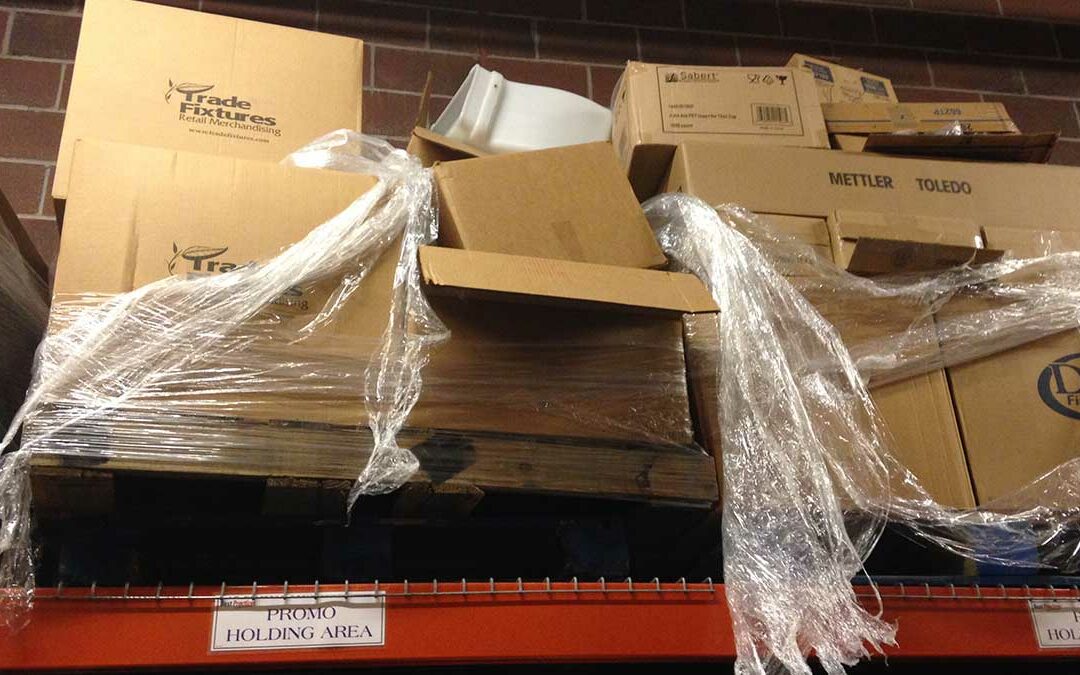
In U.S. supply chains, pallet stability is not optional — it is a core requirement for safe, efficient, and damage-free logistics. Yet over $5 billion of goods are lost annually due to pallet load failures. The surprising truth is that most failures come from preventable issues such as incorrect stretch film usage, inconsistent wrapping patterns, weak pallets, or simple operator mistakes.
At TP Plastic USA, we supply stretch film to warehouses, fulfillment centers, eCommerce distributors, and exporters across California, Texas, Illinois, Florida, and major logistics hubs. Through thousands of customer interactions, we’ve identified the 7 most common reasons pallets fail — and how to solve each one using better materials, better wrapping technique, and better load containment planning.
This is the complete guide.
1. Cause #1 — Incorrect or Inconsistent Tension When Wrapping
No factor affects pallet stability more than tension, because tension activates the stretch film’s:
-
Holding force
-
Memory (recovery)
-
Containment strength
-
Ability to lock the load into place
Why Pallets Fail When Tension Is Too Low
-
The film isn’t properly stretched
-
Holding force is weak
-
Boxes shift during forklift handling
-
Pallet leans during truck vibration
-
Layers separate due to lack of downward force
Why Pallets Fail When Tension Is Too High
-
Stretch film snaps or tears
-
Corners puncture the film
-
Upper layers collapse due to compression
-
Film loses elasticity and can’t recover
Human Factor:
Hand wrapping creates massive inconsistency because every worker pulls with different strength, tone, speed, and angles.
Solution
-
Machine wrap → consistent pre-stretch, correct tension
-
High-quality LLDPE stretch film → predictable stretch range
-
Training for hand-wrap operators → proper angle + pulling technique
-
Use power-prestretch films for high-volume warehouses
TP Plastic USA produces both hand-grade and machine-grade films engineered for accurate, repeatable tension performance across different load types.
2. Cause #2 — Choosing Low-Quality or Incorrect Stretch Film Grade
Even if wrapping technique is perfect, film choice can make or break a pallet.
Common Film Quality Failures
-
Inconsistent thickness (gauge variation)
-
Poor resin blend → weak mechanical properties
-
Low puncture resistance → tears on corners
-
Poor cling → layers slide apart
-
Low recovery force → film relaxes over time
-
Film has no memory → pallet shifts after 24–48 hours
These flaws are normal in cheap, generic, or downgraded films that rely on mixed or recycled materials without proper quality control.
Film Must Match the Load Type
-
Heavy loads → high puncture, higher gauge
-
Light loads → downgauged film is more efficient
-
Tall loads → high memory film
-
Uneven loads → tough, multi-layer film
TP Plastic USA uses controlled LLDPE/LDPE layer structures for consistent performance across heavy, mixed, and export pallets.
3. Cause #3 — Wrong Wrapping Pattern or Poor Application Technique
A pallet wrapped incorrectly is a collapsing pallet waiting to happen — even with premium film.
7 Common Wrapping Mistakes
-
Not securing film to pallet base
-
Only wrapping the load, not the pallet
-
Too few bottom wraps (no anchor)
-
No reinforcement in the middle “shift zones”
-
Wrapping too tight at top and too loose at bottom
-
Poor overlap between layers
-
No top wrap to lock the upper layers
Each mistake reduces the holding force by as much as 40%.
What a Proper Wrapping Pattern Looks Like
-
Start with 2–4 tight bottom wraps
-
Apply upward spiral with 50% overlap
-
Reinforce middle layers (2–3 extra wraps)
-
Add 1–2 secure top wraps
-
Ensure consistent film tension throughout
Correct wrapping can dramatically reduce film usage while strengthening the pallet.
4. Cause #4 — Poor Pallet Building and Improper Load Stacking
Even the best stretch film cannot fix a badly built pallet.
Common Pallet Building Errors
-
Mixing many box sizes
-
Gaps between cartons
-
Heavy boxes on top of light boxes
-
Weak boxes forming the base
-
Overhanging boxes beyond the pallet edge
-
Leaning layers or tilted carton rows
Each of these increases the load shift risk significantly.
Proper Pallet Building Principles
-
Heaviest items always at the bottom
-
Largest, most stable boxes form the foundation
-
Align boxes flush with pallet edges (no overhang)
-
Minimal gaps
-
Maintain a square, column-stacked shape
-
Use slip sheets when needed
When the pallet itself is stable, the film only needs to maintain—not fix—the load.
5. Cause #5 — Weak, Broken, or Low-Quality Pallets
The base determines everything.
Pallet Defects That Cause Collapse
-
Broken or cracked deck boards
-
Loose nails or missing boards
-
Rotten wood
-
Too much flex in the pallet surface
-
Significant gaps
-
Unbalanced weight distribution
Impact on Stretch Film Performance
A weak pallet:
-
Causes load sway
-
Bends under weight
-
Makes bottom layers unstable
-
Creates uneven film tension
-
Leads to faster pallet collapse during vibration
Prevention
-
Inspect pallets before use
-
Use export-quality pallets for shipping
-
Avoid damaged pallets even for domestic shipments
-
Replace pallets that flex too much under load
Many companies lose thousands simply because the pallet itself fails — not the film.
6. Cause #6 — Load Not Properly Anchored to the Pallet
If the load is not physically connected to the pallet, it can slide off even if wrapped properly.
How Loads Become “Disconnected”:
-
Bottom wraps too weak
-
Film not wrapped around pallet deck
-
No downward tension to lock the load
-
Film starts wrapping too high
As a result:
-
Load slides sideways
-
Pallet tilts or collapses
-
Entire shipment can fall off inside the truck
Prevention
-
Wrap the pallet base tightly at least 2–3 times
-
For machine wraps → lock the film under the pallet lip
-
Maintain downward tension during bottom wraps
-
Ensure the first layer is anchored before moving upward
Anchoring is one of the most critical—but most overlooked—steps in load containment.
7. Cause #7 — Environmental Stress: Heat, Cold, Humidity, and Vibration
Stretch film is a performance material, and environmental conditions affect it.
Heat
-
Film relaxes
-
Memory weakens
-
Boxes lose rigidity
Cold
-
Film becomes brittle
-
Risk of snapping
-
Reduced elongation
Humidity
-
Cartons lose compression strength
-
Entire pallet weakens
-
Film stretch behavior changes
Vibration
Long-haul trucking, container shipping, and rail transport introduce:
-
Micro-shifting
-
“Oscillation stress”
-
Lateral movement
-
Pressure creep
These all attack the weakest point—whether that’s film, pallet, or carton.
Prevention
-
Use temperature-stable LLDPE formulas
-
Reinforce top and middle zones
-
Avoid over-stretching in cold environments
-
Use higher cling in hot climates
TP Plastic USA films are engineered with stable recovery force across temperature ranges common in U.S. trucking, export containers, and warehouse storage.
Bonus Section: The Real Cost of Pallet Load Failure
A single pallet failure can cost:
-
$200–$2,500 in damaged goods
-
Hours of labor to rewrap
-
Customer dissatisfaction or shipment rejection
-
OSHA safety incidents
-
Delays in the entire warehouse line
This is why investing in high-quality stretch film and proper wrapping technique produces massive long-term savings.
How TP Plastic USA Helps Prevent Pallet Failures
We support distribution centers and warehouses with:
✔ High-performance machine-grade stretch film
-
200–400% stretch
-
Multi-layer LLDPE structure
-
Superior puncture resistance
✔ Hand-grade stretch film
-
Light, strong, comfortable for manual wrapping
-
High cling
-
Consistent holding force
✔ Technical consultation
We advise on:
-
Load type
-
Wrapping pattern
-
Film grade
-
Equipment compatibility
✔ U.S. inventory
Fast delivery from American warehouse stock.
✔ OEM/ODM custom specifications
Micron, width, length, core size, additives, and packaging.
Pallet Failures Are Preventable — With the Right Film and the Right Technique
Pallet load failures are rarely caused by accidents.
They’re caused by:
-
Wrong film
-
Bad tension
-
Poor stacking
-
Weak pallets
-
Incorrect wrapping patterns
-
Environmental stress
-
And missed anchoring
With the right stretch film and optimized load containment methods, these failures become extremely rare.
TP Plastic USA stretch films are engineered to protect your warehouse, your products, and your bottom line.


