


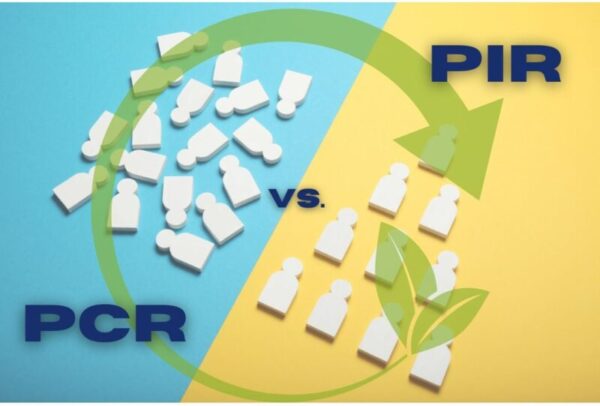
As sustainability becomes a defining force in the packaging industry, recycled resin has moved from a niche option to a mainstream material for brands, distributors, and logistics operators. But not all recycled plastic is the same — and understanding the difference between PCR vs PIR plastic is essential for choosing the right material for performance, cost, and environmental impact.
At TP Plastic USA, we work with both PCR and PIR resin across stretch film, mailer bags, trash bags, plastic bags, and CPE/TPE aprons. Knowing how each resin behaves helps us design stronger, lighter, and more recyclable packaging for U.S. and global customers.
Let’s break down what PCR and PIR really mean — and how these materials shape the future of circular packaging.
Table of Contents
Toggle1. What Is Recycled Plastic? A Quick Overview
Recycled plastic comes from two primary sources:
Post-consumer waste: items used and discarded by consumers
Post-industrial waste: scrap generated during manufacturing
Both contribute to the circular economy, but they differ significantly in quality, cleanliness, and mechanical properties.
This leads to the two core categories of recycled resin:
PCR – Post-Consumer Recycled Resin
PIR – Post-Industrial Recycled Resin
Understanding the strengths and limitations of each is key for selecting the right resin for each packaging application.
2. What Is PIR Resin? (Post-Industrial Recycled)
PIR comes from clean, unused plastic waste generated during manufacturing, such as:
Edge trims
Offcuts
Startup waste
Film roll ends
Misprints
Clean rejected parts
Because PIR has not yet been used by consumers, it has several advantages:
Benefits of PIR Resin
✔ High purity — collected directly from controlled factory environments
✔ Consistent color — usually clear or uniform
✔ Stable MFI — predictable melt flow index
✔ Strong mechanical properties
✔ Lower odor compared to PCR
✔ Ideal for film and bags that require strength
Where PIR Works Best
PE stretch film
LDPE mailer bags
HDPE/LDPE trash bags
Clear LDPE plastic bags
Thin-gauge films
CPE/TPE film blends (in specific ratios)
PIR delivers recycled content benefits without significantly compromising performance.
3. What Is PCR Resin? (Post-Consumer Recycled)
PCR is made from plastic recovered after consumer use, such as:
Retail bags
E-commerce mailers
Stretch wrap
Bottle caps
LDPE film collected from store drop-off programs
PCR is essential for closing the loop, turning waste back into valuable packaging.
Benefits of PCR Resin
✔ Highest environmental impact — diverts plastic from landfill
✔ Reduces demand for virgin resin
✔ Supports brand ESG and sustainability claims
✔ Favored by retailers like Walmart, Amazon, Target
✔ Lower carbon footprint per ton
Challenges of PCR
May have more color variation
Possible odor depending on feedstock
MFI inconsistency in lower-grade PCR
Requires advanced filtration and additive support
When processed correctly, PCR can deliver excellent performance — and growing demand is pushing rapid improvement in quality.
4. PCR vs PIR Plastic: Key Differences at a Glance
|
Criteria |
PCR Resin |
PIR Resin |
|---|---|---|
|
Source |
Consumer waste |
Factory scrap |
|
Purity |
Moderate → depends on feedstock |
High, very clean |
|
Color |
Can vary |
Very consistent |
|
Odor |
Possible mild odor |
Low odor |
|
Strength |
Good, may need additives |
Excellent |
|
MFI Consistency |
Lower |
High |
|
Environmental Impact |
Highest (true circularity) |
High (waste diversion) |
|
Cost |
Higher |
Lower |
|
Best Use Cases |
Trash bags, mailers, eco lines |
Stretch film, bags, film rolls |
Both are valuable — but they serve different purposes.
5. How TP Plastic USA Uses PCR and PIR Resin Across Product Lines
We engineer formulations based on performance needs, sustainability goals, and customer requirements.
a) Stretch Film
Primary: PIR resin (clean, stable)
PCR: Limited use for specific grades
Results:
Excellent stretch ratio
Strong puncture resistance
Reliable tensile strength
b) LDPE Mailer Bags
Light PCR blends (10–30%) for sustainable lines
PIR for clean, bright-colored mailers
Heavy-metal-free masterbatch ensures recyclability
Benefits:
Strong sealing
Smooth printing
Enhanced sustainability profiles
c) HDPE/LLDPE Trash Bags
One of the best applications for recycled resin.
PCR (30–100%) for black or tinted trash bags
PIR to improve tear strength and consistency
Odor-neutralizing additives for PCR-heavy formulations
Result:
High durability
Lower carbon footprint
Retail-compliant recyclability (#2 or #4)
d) Plastic Bags (HDPE/LDPE)
PIR for clarity and strength
PCR for economical, sustainable product lines
Applications:
Grocery bags
Produce bags
Flat bags
Industrial liners
e) Gloves (CPE/TPE)
Recycled content integration is possible depending on:
Application
Thickness
Regulatory requirements
We maintain strict quality control to ensure consistency.
6. Sustainability Impact: Which Resin Is Greener?
PCR is the most impactful environmentally
Because it:
Uses waste already in circulation
Reduces landfill burden
Cuts virgin resin demand
Lowers carbon footprint significantly
PIR is cleaner and more stable
Because it:
Reduces factory waste
Produces stronger, clearer products
Minimizes performance variability
Both are essential for a healthy recycling ecosystem.
PCR delivers circularity, PIR delivers efficiency — and together, they enable sustainable, high-performance packaging.
7. Retail & Compliance Benefits of PCR and PIR Resin
Major U.S. retailers increasingly encourage or require recycled content.
Retailer Guidelines
Walmart: PCR preferred in many packaging categories
Amazon: Supports recycled mailers and PE films
Target: Encourages material circularity
Costco: Favors fully recyclable mono-material PE
Certifications Supported
GRS (Global Recycled Standard)
ASTM D7611 resin coding (#2, #4)
ISO 14021 environmental labeling
Recyclability standards for PE films
Using PCR or PIR helps manufacturers meet these expectations seamlessly.
8. The Future: Higher-Quality PCR & Closed-Loop PIR Systems
Recycled resin technology is rapidly improving:
Next-generation PCR
Higher optical clarity
Improved odor control
Better filtration systems
More stable MFI
Suitable for thin films and mailers
Advanced PIR Systems
Automated inline trim recovery
Closed-loop mixing
Predictive quality monitoring
Zero-waste extrusion
The future is not choosing PCR or PIR —
it’s combining both intelligently to maximize performance and sustainability.
Choosing the Right Recycled Resin Matters
PCR and PIR are both critical components of modern, sustainable packaging.
PIR delivers consistent performance, clarity, and strength.
PCR delivers maximum environmental impact and supports true circularity.
At TP Plastic USA, we engineer each product — from stretch film to mailers, trash bags, plastic bags, and aprons — using the optimal blend of PCR vs PIR plastic to meet customer needs, sustainability targets, and U.S. retail compliance.
Because better packaging isn't just about recycled content —
it’s about using the right recycled content in the right way.


