


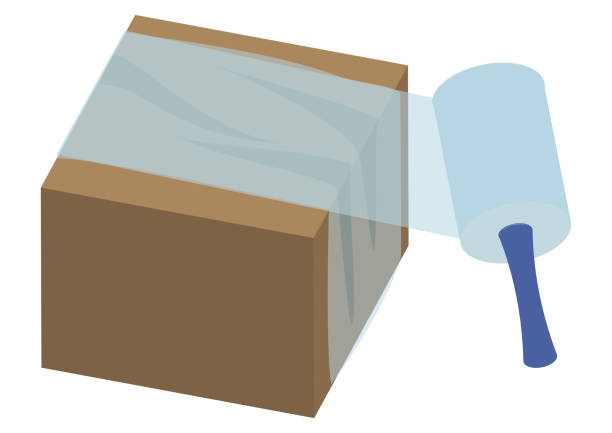
Stretch film breaks are one of the biggest sources of frustration in warehouses. They slow down operations, cause inconsistent pallet quality, waste material, and force workers to rewrap pallets — costing time and money.
Many teams blame the film itself, but in reality, breakage almost always comes from a mismatch between film, machine setup, and load conditions.
Understanding the true causes of breakage is the first step toward preventing it. This guide breaks down the eight most common reasons film breaks inside U.S. warehouses and what you can do to fix them.
1. Sharp Corners and Hard Edges on the Load
Cartons with exposed corners, metal tins, plywood edges, or protruding product can easily cut into film during wrapping.
Why it causes breaks:
-
Stretch film becomes thinnest at high pre-stretch
-
Sharp pressure points can tear the film on contact
-
B-loads and C-loads often shift slightly while wrapping, increasing friction
How to prevent it:
-
Reinforce corner zones with extra wrap
-
Use higher puncture-resistant multi-layer film
-
Reduce pre-stretch slightly around sensitive zones
-
Choose a film grade engineered for heavy or irregular loads
2. Incorrect Pre-Stretch Settings
Most machine film failures occur because pre-stretch is too high or too low.
Over-stretching:
-
Film becomes too thin
-
Puncture resistance drops
-
Film snaps under tension
Under-stretching:
-
Film does not develop enough recovery
-
Tension becomes inconsistent
-
Film drags and tears during application
Solution:
Match pre-stretch range to the film grade:
-
High-performance films → 220–300%
-
Standard machine films → 150–220%
TP Plastic USA provides recommended settings for each film.
3. Damaged Rolls or Misaligned Cores
A roll that is dented, loosely wound, or has a distorted core will cause uneven tension during wrapping.
Signs of this issue:
-
Film pulls off the roll in “bursts”
-
Film flutters or jerks during rotation
-
Breaks occur at consistent intervals
Fix:
-
Inspect rolls before loading
-
Store film vertically, not sideways
-
Replace dented or crushed rolls
-
Ensure roll sits level in the carriage
4. Low-Quality Resin or Single-Layer Film
All films are not created equal. Cheap films cut corners on resin quality, layer structure, and extrusion control.
Typical problems:
-
Brittle film with weak elongation
-
Thin spots from uneven extrusion
-
Poor toughness against puncture
-
Inconsistent roll-to-roll performance
Why TP Plastic USA performs better:
-
Multi-layer coextrusion
-
High-quality C6/C8 LLDPE resin
-
Consistent gauge control
-
Engineered recovery strength
Quality film reduces breakage dramatically — especially on B- and C-loads.
5. Improper Threading in the Machine
Threading mistakes cause friction points, sudden tension spikes, or twist in the film.
Symptoms:
-
Film repeatedly breaks near the carriage
-
Film “snaps back” during wrapping
-
Uneven tension visible on the pallet
Fix:
-
Follow the threading diagram precisely
-
Remove dust or debris from rollers
-
Ensure film does not rub against edges or bolts
Even small threading errors can increase break frequency.
6. Worn or Dirty Machine Components
Machine maintenance has a huge impact on film behavior.
Common issues:
-
Dirty pre-stretch rollers
-
Worn gears
-
Loose belts
-
Faulty tension sensors
Operational effect:
The film receives uneven stretch and inconsistent pressure, making it far more likely to fail.
Warehouse best practice:
-
Clean rollers weekly
-
Replace worn parts regularly
-
Check tension sensors for calibration
-
Lubricate moving components
A well-maintained machine reduces breakage more than any film upgrade.
7. Environmental Conditions: Heat, Cold, and Humidity
Film performance changes with temperature.
Heat (warehouse or container):
-
Reduces tension
-
Speeds up creep
-
Softens the film
Cold storage:
-
Makes film brittle
-
Decreases elongation
-
Causes sudden tearing
Humidity:
While it doesn’t directly weaken film, it can affect carton integrity, increasing the chances of sharp edges causing damage.
Solutions:
-
Use heat-resistant formulations for export or summer use
-
Use cold-grade film for freezers
-
Adjust pre-stretch seasonally
8. Using the Wrong Film for the Load Type
This is the #1 root cause behind repeated breaks.
Examples:
Thin film on a C-load:
Breaks instantly on sharp corners.
Soft film on a heavy load:
Tears under stress or during transport.
Standard film on aggressive pre-stretch machines:
Over-thins and snaps.
Fix:
Match film to load:
-
A-loads → downgauged high-efficiency film
-
B-loads → balanced performance multi-layer film
-
C-loads → high puncture-resistant engineered film
Correct pairing = minimal breakage.
How TP Plastic USA Helps Reduce Film Breaks
We work directly with warehouse teams to improve:
✔ Film selection
✔ Pre-stretch tuning
✔ Wrap pattern optimization
✔ Load type evaluation
✔ Machine maintenance recommendations
✔ Film testing under real load conditions
Our engineered films feature:
-
multi-layer coextrusion
-
high puncture resistance
-
stable recovery force
-
consistent roll-to-roll performance
-
heat- and cold-resistant options
All designed to minimize film breaks and improve pallet stability.
Conclusion
Film breaks waste time, material, and labor — and they’re almost always preventable.
By identifying the eight core causes and addressing the root problems, warehouses can dramatically improve wrapping efficiency and reduce operational downtime.
With engineered stretch film solutions and hands-on support, TP Plastic USA helps operations wrap faster, safer, and more reliably — every pallet, every day.


