


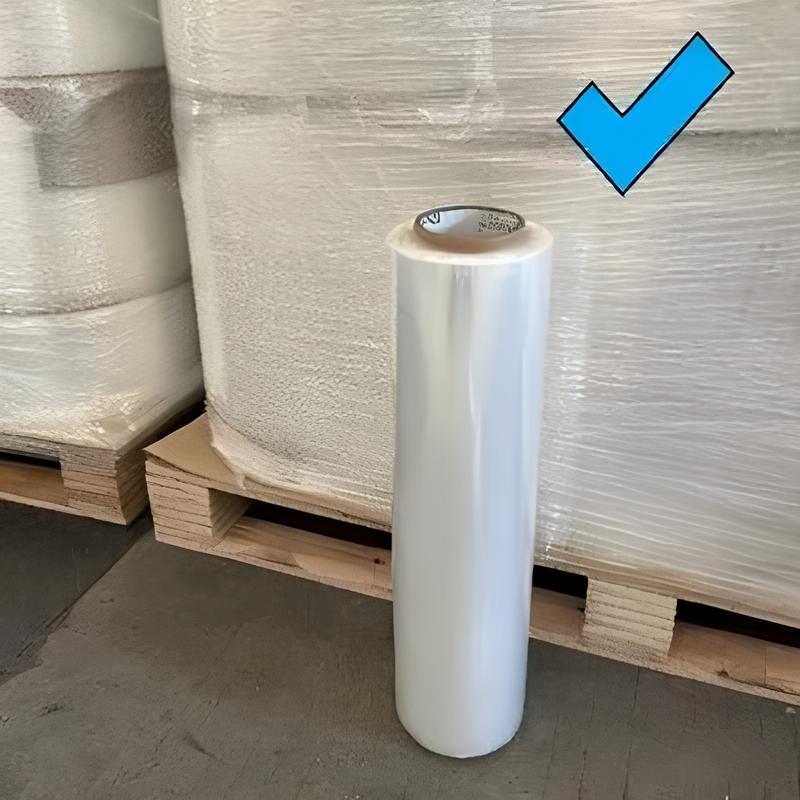
Choosing stretch film is not about picking a gauge, a thickness, or a price point — it’s about matching the right film to the right load type. Every pallet behaves differently based on its shape, weight, carton strength, surface friction, stacking pattern, and product composition. These factors dramatically affect containment force requirements, film elongation behavior, and overall pallet stability.
Across the U.S., one of the biggest sources of warehouse product damage is incorrect film selection — using heavy film where light film works better, using weak film where high-recovery film is needed, or applying wrap patterns that don’t match the load profile.
This article explains how to choose the right stretch film based on A/B/C load categories, why it matters, and how this decision impacts operational efficiency from the wrapping line to the delivery destination.
1. Understanding A-, B-, and C-Load Types in Real Warehouse Conditions
Load type classification is the foundation of stretch film selection.
Here’s how the three major load types differ in behavior and wrapping requirements.
1.1 A-Loads: Stable, Uniform, and Easy to Wrap
A-loads are the “ideal scenario” — consistent, predictable, and already stable before wrapping.
Characteristics:
-
Straight vertical walls
-
No gaps between cartons
-
Even layers without protrusions
-
High carton strength and similar dimensions
-
Strong friction between boxes
Common examples:
-
Beverage cartons
-
Paper products
-
Consumer goods with uniform packaging
-
Tight-packed food trays
Why this matters:
A-loads require minimal containment force because the load already resists movement. This allows for thinner film, higher pre-stretch efficiency, and fewer wrap revolutions — lowering material cost.
1.2 B-Loads: Slightly Irregular, Minor Gaps, Moderate Risk
B-loads are the most common in U.S. warehouses and retail distribution. They are stable enough to wrap easily but unpredictable enough to shift during transport.
Characteristics:
-
Small spacing between cartons
-
Slightly uneven stacking
-
Some product variation
-
Occasional weak cartons
-
Moderate surface friction
Examples:
-
E-commerce assortment pallets
-
Food products with mixed carton shapes
-
Consumer goods with slight dimensional inconsistency
Why this matters:
B-loads require balanced strength — not too light, not too heavy. The film must resist outward pressure without over-thinning during pre-stretch.
1.3 C-Loads: Highly Irregular, Unstable, Highest Risk
C-loads create the most challenges. These are loads that lean, bulge, shift internally, or contain mixed product types.
Characteristics:
-
Gaps and voids
-
Irregular shapes or overhangs
-
Mixed packaging strength
-
Soft or fragile cartons
-
Products that settle or compress over time
Examples:
-
Pick-and-pack mixed SKU pallets
-
Furniture, hardware, motors, large appliances
-
Tall or top-heavy loads
-
Irregular-shaped industrial goods
Why this matters:
C-loads require high-performance stretch film engineered to maintain recovery, resist puncture, and provide strong containment force despite load movement.
2. How Load Type Directly Determines the Film You Need
Film selection must change based on load type — there is no universal stretch film that works for everything.
2.1 For A-Loads → Use Lightweight, High-Efficiency Film
A-loads don’t require heavy force. Using thick film wastes money.
Recommended film characteristics:
-
39–47 gauge high-performance film
-
Moderate recovery level
-
Excellent pre-stretch capability (220–250%)
-
Standard cling
-
Thin but strong multi-layer structure
Why it works:
-
Smooth surfaces reduce tearing risk
-
Minimal outward pressure
-
Stable footprint reduces leaning
-
Fewer wraps are needed, increasing speed
A-loads offer the highest film savings opportunity.
2.2 For B-Loads → Use Mid-Strength Film With Balanced Performance
B-loads are unpredictable; they require a film that can handle minor deformation and carton movement.
Recommended film characteristics:
-
47–63 gauge film
-
Higher recovery for improved containment
-
Better puncture resistance
-
Consistent cling for stable layer bonding
-
Pre-stretch range: 220–280%
Why it works:
-
Film needs enough strength to resist small gaps
-
Must maintain tight containment over time
-
Must handle vibration, truck braking, and shifting loads
B-loads typically benefit from multi-layer machine film.
2.3 For C-Loads → Use High-Performance Multi-Layer Film
C-loads need durability, strength, and resilience. Cheap film will always fail.
Recommended film characteristics:
-
63–80 gauge engineered film
-
5–9 layer coextrusion for maximum toughness
-
Excellent puncture resistance for sharp edges
-
Strong recovery
-
Reinforced wrap pattern (especially mid-zone)
-
Lower creep rate for long-distance hauling
Why it works:
-
Handles sharp corners and irregular edges
-
Maintains containment even if load shifts internally
-
Supports long transit routes with temperature changes
-
Reduces risk of pallet collapse during forklift handling
C-loads are where premium film pays for itself — preventing damage far outweighs material cost.
3. Film Selection Mistakes That Cost Warehouses the Most Money
Most pallet failures come from incorrect film selection, not operator error or wrap technique.
3.1 Using Thin Film on Difficult Loads
Even if a load looks stable, it may shift internally. Thin film tears easily on C-loads or uneven B-loads.
3.2 Using Thick Film Where It’s Not Needed
Thicker film doesn’t guarantee better containment. On A-loads, it increases cost and reduces efficiency without adding benefit.
3.3 Ignoring Recovery and Force-to-Load
Recovery — not thickness — controls containment force. A lower-gauge film with strong recovery can outperform a thicker low-quality film.
3.4 Assuming All 60-Gauge Films Are Equal
Film performance depends on:
-
Resin quality
-
Layer structure
-
Stretch behavior
-
Creep resistance
-
Cling formulation
Two films with identical gauge specs can behave completely differently in real-world use.
4. Practical Load Evaluation: How to Identify A-, B-, and C-Loads Quickly
Here’s what warehouse teams can check:
✔ Carton alignment
Straight lines → A-load
Slight unevenness → B-load
Mixed or unpredictable → C-load
✔ Gaps and voids
None → A
Minor → B
Large → C
✔ Surface friction
High friction (paperboard) → easier to stabilize
Low friction (shrink film, glossy boxes) → requires stronger film
✔ Load shift when pushed
Doesn’t move → A
Moves slightly → B
Moves easily → C
✔ Top layer stability
Flat → A
Moderately uneven → B
Unstable or top-heavy → C
A 5-second visual check can prevent thousands of dollars in damage claims.
5. Shipping and Environmental Factors That Affect Film Choice
Load type is important, but conditions during transit matter too.
5.1 Long-Distance Freight Requires More Recovery
The longer the trip, the more creep occurs.
C-loads shipped cross-country need strong recovery films.
5.2 Hot Warehouses or Containers Require Heat-Resistant Films
Heat accelerates tension loss.
Films with higher-quality resins maintain containment force longer.
5.3 Heavy Vibration Routes (e.g., Midwest trucking)
This requires stronger cling and tougher puncture resistance.
5.4 Cold Storage Conditions
Cold makes film brittle; special grades may be required.
Choosing the right film saves money by reducing:
-
rewraps
-
film breaks
-
product damage
-
pallet failures
-
returns and insurance claims
6. How TP Plastic USA Helps You Choose the Right Film
We evaluate:
-
Your load type distribution (A/B/C %)
-
Machine type and pre-stretch settings
-
Film usage per pallet
-
Pallet failure patterns
-
Shipping routes and conditions
-
Carton quality
-
Mid-zone pressure
-
Operator habits
Then we recommend the ideal film:
✔ For A-loads → downgauged, high-efficiency films
✔ For B-loads → balanced strength multi-layer films
✔ For C-loads → high-performance engineered films with strong recovery
✔ For export → low-creep, heat-resistant formulations
✔ For 3PL → versatile films that cover mixed load profiles
We also help adjust:
-
wrap pattern
-
wrap count
-
pre-stretch ratio
-
mid-zone reinforcement strategy
So your pallets stay stable — consistently.
Conclusion
Choosing stretch film by gauge alone leads to wasted material, unstable loads, and frequent pallet failures.
Choosing film by load type ensures:
-
proper containment
-
safer transport
-
reduced film consumption
-
fewer rewraps
-
lower product damage
-
better operational efficiency
TP Plastic USA supports warehouses, manufacturers, and 3PLs with engineered films customized for each load profile — ensuring every pallet reaches its destination safely.


