


Table of Contents
ToggleMore Than Just a Barrier
Aprons have been part of professional attire for centuries — from butchers to bakers, hairdressers to factory workers. Traditionally, these aprons were cloth, heavy, and required daily washing. But in today’s fast-paced industries where hygiene, speed, and cost savings matter, a new standard has emerged: the nylon apron.
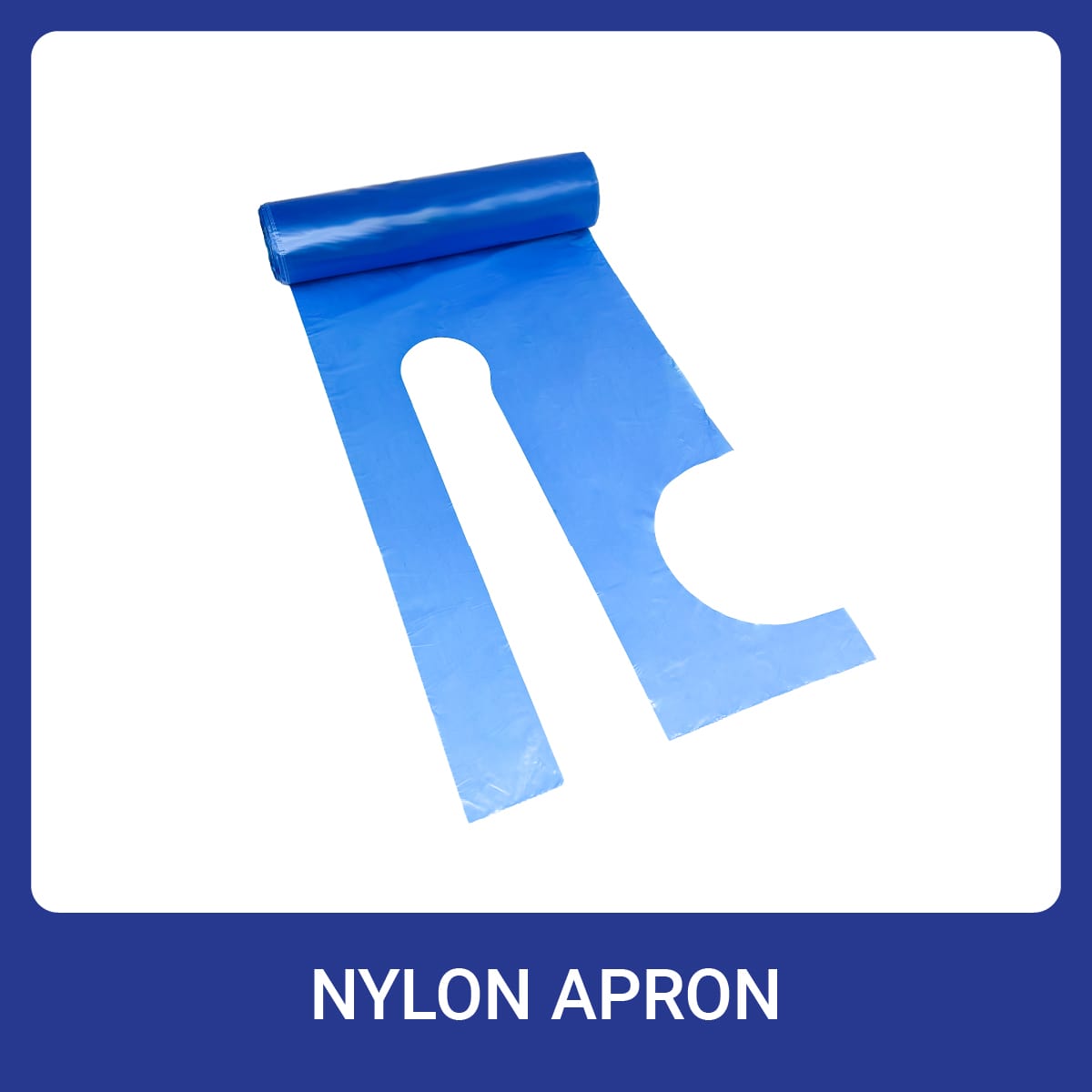
Lightweight, water-resistant, and economical, nylon aprons have become indispensable across foodservice, spas, salons, healthcare, and industry. Far from being “just a piece of plastic,” nylon aprons represent a smart design choice that balances hygiene, efficiency, and sustainability.
At TP Plastic USA, we produce nylon aprons that meet international standards, giving businesses the confidence to protect workers, customers, and their bottom line.
The Rise of Nylon Aprons: From Cloth to Modern Hygiene
Before 1980s: Cloth aprons dominated kitchens, requiring daily laundering. Effective, but labor-intensive and prone to staining.
1980s–2000s: The rise of disposable plastics in foodservice introduced lightweight aprons, especially in catering and fast food.
Today: Nylon aprons are standard in many industries — stronger than paper, cheaper than cloth, and more comfortable than heavy PVC.
This shift reflects broader changes in hygiene regulations, consumer expectations, and global supply chains.
What Makes Nylon Aprons Different?
Material Advantages
Made from nylon or nylon-blend film.
Naturally water-resistant.
Resistant to grease, oils, and dyes.
Can be transparent, opaque, or colored.
Key Benefits
Lightweight comfort: Less heat retention than cloth.
Durability: Less likely to tear compared to paper.
Single-use hygiene: Perfect for high-risk environments.
Cost savings: No laundry = lower operating costs.
Nylon Aprons in Foodservice
Protecting Hygiene Standards
In restaurants and food factories, contamination risks are high. Nylon aprons help:
Prevent cross-contamination between raw and cooked foods.
Shield clothing from spills that can carry bacteria.
Maintain compliance with FDA Food Code and OSHA workplace safety rules.
Practical Benefits
Staff can change aprons quickly between tasks.
Bulk supply ensures constant availability.
Colors (white, blue, transparent) can be coded for different kitchen zones.
Case Study: Catering Efficiency
A catering company serving 1,000+ meals per day switched from cloth to disposable nylon aprons. They cut laundry bills by $20,000 annually and reduced staff turnover time between events by 30%.
Nylon Aprons in Spas and Salons
Professional Image
Customers expect cleanliness in beauty environments. Nylon aprons:
Provide a consistent, polished look for staff.
Resist stains from oils, dyes, and cosmetics.
Can be branded with logos for marketing.
Hygiene Impact
One apron per client reduces cross-contact.
Easy disposal reinforces a clean, sanitary image.
Case Study: Hair Dye Protection
A hair salon chain introduced nylon aprons for stylists. The aprons resisted chemical dyes, preventing staff uniforms from frequent replacement. Savings: $5,000 per year per location.
Nylon Aprons in Industrial and Medical Settings
Industrial Applications
Assembly lines use nylon aprons to protect against oils, dust, and adhesives.
Lightweight aprons reduce worker fatigue compared to PVC alternatives.
Ideal for packaging and logistics facilities.
Healthcare and Labs
Disposable nylon aprons act as PPE in hospitals and labs.
Protects from fluid exposure.
Pairs with gloves and masks for infection control.
Case Study: Warehouse Packaging
A U.S. fulfillment center equipped 200 workers with nylon aprons. Workers reported 40% greater comfort compared to heavier PVC aprons, reducing fatigue-related slowdowns.
Nylon Aprons vs Cloth and PVC Aprons
|
Feature |
Nylon Aprons |
Cloth Aprons |
PVC/Heavy Aprons |
|---|---|---|---|
|
Durability |
Resistant to tearing, water-proof |
Long-lasting, but stain easily |
Very durable, heavy |
|
Hygiene |
Single-use or easy to replace |
Require daily laundry |
Hard to clean, reusable |
|
Comfort |
Lightweight, breathable |
Heavy, hot in kitchens |
Uncomfortable for long wear |
|
Cost |
Low per piece, bulk-friendly |
High laundry + replacement cost |
Expensive upfront |
|
Best for |
Food, spa, medical, logistics |
Upscale dining, artisanal shops |
Chemical/industrial heavy |
Cost Analysis: Hidden Savings in Nylon Aprons
Direct Savings
No laundry contracts.
Lower water, detergent, and electricity use.
Bulk ordering keeps unit costs minimal.
Indirect Savings
Faster staff turnover between shifts.
Less uniform damage.
Improved compliance reduces risk of fines.
Example: A spa chain with 50 locations switched to nylon aprons. Combined laundry, replacement, and compliance savings totaled $250,000 annually.
Global Perspective on Nylon Aprons
United States
Common in fast food, catering, and healthcare.
Must meet FDA food-contact safety standards.
European Union
Strong focus on eco-friendly designs — biodegradable or recyclable options gaining traction.
EN 1186 compliance for food contact.
Asia
Widely adopted in food processing and export facilities.
Vietnam, China, and Thailand are major production hubs.
Sustainability: Can Nylon Aprons Be Eco-Friendly?
Recyclable blends: Many nylon aprons are compatible with LDPE recycling streams.
Biodegradable options: PLA-nylon blends are being developed for foodservice.
Lightweight advantage: Use less resin per apron compared to cloth lifecycle impact.
Brands like Whole Foods, Unilever, and Target are pushing suppliers toward eco-friendly nylon aprons.
Choosing the Right Nylon Aprons
Key Considerations
Thickness:
20–30 microns for light foodservice.
40+ microns for industrial use.
Size & Coverage:
Waist-only vs full-body coverage.
Longer sizes for industrial and medical use.
Color Options:
Clear/white for kitchens.
Black for salons.
Blue for hospitals.
Certifications:
FDA approval for food contact.
ISO 16603 for medical protection.
How TP Plastic USA Delivers Quality Nylon Aprons
We specialize in nylon aprons designed for different industries:
Foodservice Aprons: Lightweight, FDA-compliant, bulk packed.
Spa & Salon Aprons: Sleek designs, resistant to dyes and oils.
Industrial Aprons: Thicker material for warehouse and light chemical use.
Medical Aprons: Hygienic, disposable, tested for infection control.
With OEM/ODM services, we customize apron size, thickness, color, and packaging.
Conclusion: Nylon Aprons as Smart Business Strategy
Nylon aprons are not just protective gear — they’re a tool for saving money, improving hygiene, and maintaining compliance. Whether in kitchens, spas, salons, hospitals, or factories, the benefits are clear:
Lower costs.
Better hygiene.
Improved comfort.
Sustainable options.
At TP Plastic USA, we provide nylon aprons that meet global standards, ensuring your business operates efficiently and responsibly.
TP Plastic – The quality you can trust!
Zalo/WhatsApp: (+84) 915 871 722 / (+1) 818 914 – 0351
Website: tpplasticusa.com
Email: contact@tpplasticusa.com


