


Many businesses assume shipping costs are determined only by how much a package weighs. In reality, most carriers today calculate shipping using dimensional weight (DIM weight) — a pricing model that considers the size of the package, not just the physical weight.
For e-commerce sellers, warehouses, and fulfillment operations, understanding dimensional weight can significantly reduce shipping expenses. Companies that ignore DIM weight often unknowingly pay much higher shipping costs than necessary.
This guide explains what dimensional weight is, how carriers calculate it, and how businesses can optimize packaging to reduce shipping costs.
What Is Dimensional Weight?
Dimensional weight (DIM weight) is a shipping pricing method that calculates cost based on package volume instead of actual weight.
Carriers introduced DIM weight because large but lightweight packages take up valuable space in trucks and aircraft.
Instead of charging purely by pounds, carriers calculate the space a package occupies.
Why Carriers Use Dimensional Weight
Transportation capacity is limited by space as much as by weight.
For example:
-
A truck may reach maximum space capacity before reaching weight limits.
-
Lightweight but bulky packages reduce the number of shipments that can fit in a vehicle.
Dimensional weight pricing ensures carriers are compensated fairly for the space used.
How Dimensional Weight Is Calculated
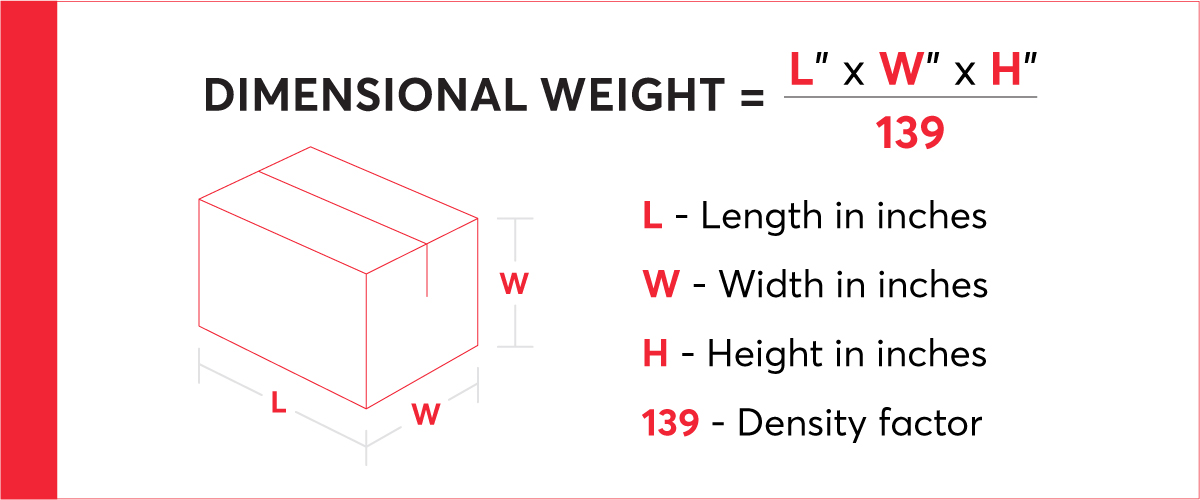
The typical formula used by carriers:
DIM Weight = (Length × Width × Height) ÷ DIM Factor
Where:
-
Dimensions are measured in inches
-
DIM factor varies by carrier (commonly 139 or 166 in the U.S.)
Example:
Package size:
-
16 × 12 × 10 inches
Calculation:
16 × 12 × 10 = 1920
1920 ÷ 139 = 13.8 lb (rounded to 14 lb)
If the package actually weighs 6 lb, the carrier charges for 14 lb.
Actual Weight vs DIM Weight
Carriers always charge the greater of the two values:
-
Actual weight
-
Dimensional weight
If your package is small but heavy, actual weight applies.
If your package is large but light, dimensional weight applies.
Understanding this rule is critical for shipping cost optimization.
Why DIM Weight Affects E-commerce Sellers the Most
Many online stores ship products that are:
-
Lightweight
-
Bulky
-
Protected with excess packaging
Examples include:
-
Apparel
-
Home décor
-
Soft goods
-
Subscription boxes
Even though the products weigh little, large boxes can push DIM weight far above actual weight.
How Oversized Packaging Increases Shipping Costs
Using boxes that are too large creates unnecessary dimensional weight.
For example:
Product weight: 2 lb
Box size: 18 × 14 × 12
DIM weight calculation:
18 × 14 × 12 = 3024
3024 ÷ 139 = 21.8 lb
The carrier charges for 22 lb, even though the product weighs only 2 lb.
This is one of the most common cost mistakes in fulfillment.
Poly Mailers vs Boxes: DIM Weight Advantage
Flexible packaging like poly mailers often reduces dimensional weight because they:
-
Compress around the product
-
Eliminate unused air space
-
Use smaller dimensions overall
For soft products like apparel, switching from boxes to poly mailers can dramatically lower shipping costs.
Packaging Optimization Strategies
1. Use Right-Sized Boxes
Choose boxes that closely match product dimensions.
Benefits:
-
Lower dimensional weight
-
Reduced filler material
-
Lower shipping cost
2. Reduce Empty Space
Large empty space increases DIM weight.
Use:
-
Smaller boxes
-
Adjustable box sizes
-
Compact packing methods
3. Consider Flexible Packaging
For appropriate products, consider:
-
Poly mailers
-
Bubble mailers
-
Flexible pouches
These options reduce package volume.
4. Review Packaging Regularly
Businesses often continue using outdated packaging sizes.
Review packaging periodically to ensure sizes still match product dimensions.
Warehouse Packing Efficiency
Right-sized packaging improves more than just shipping costs.
It also improves:
-
Packing speed
-
Storage efficiency
-
Material usage
-
Inventory management
Packaging optimization benefits the entire fulfillment workflow.
Dimensional Weight and International Shipping
DIM weight becomes even more important for international shipments because:
-
Freight costs are higher
-
Air cargo space is limited
-
Oversized packages incur significant surcharges
Optimizing package dimensions can dramatically reduce international shipping expenses.
Common DIM Weight Mistakes Businesses Make
-
Using a single box size for all orders
-
Choosing oversized packaging “to be safe”
-
Ignoring packaging redesign opportunities
-
Not reviewing shipping invoices for DIM charges
Each mistake increases shipping cost without improving product protection.
How Bulk Packaging Supplies Help Reduce DIM Costs
Using standardized packaging supplies helps businesses:
-
Maintain consistent box sizes
-
Avoid emergency oversized packaging
-
Control fulfillment processes
Reliable packaging suppliers make it easier to maintain efficient packaging systems.
Signs Your Business Is Paying Too Much DIM Weight
You may be overpaying if:
-
Shipping charges seem higher than expected
-
Lightweight products ship expensively
-
Packages contain excessive empty space
-
DIM charges appear frequently on invoices
Analyzing packaging dimensions usually reveals optimization opportunities.
Final Thoughts: Shipping Cost Is a Packaging Decision
Dimensional weight proves that shipping cost is heavily influenced by packaging design.
By understanding DIM weight and optimizing package sizes, businesses can:
-
Lower shipping expenses
-
Improve packing efficiency
-
Reduce material waste
-
Maintain product protection
For companies shipping daily, small packaging adjustments can produce significant long-term cost savings.


